
Quick answer: ABS counted 196,600 Australian households with a completed break-in and 217,500 with an attempted break-in in 2024-25. A security camera helps record the completed event. A barking dog alarm targets the attempted-entry moment, when sound and uncertainty can make an opportunistic offender leave.

What is the core difference?
ABS 2024-25 data counted 217,500 attempted break-ins, more than the 196,600 completed break-ins. That gap matters because prevention happens before entry. A camera is mainly a witness; a barking dog alarm is a deterrent cue aimed at the decision point.
That is the whole comparison. A security camera records a person at the door, in the garage or inside the property. It may help police, insurance and your own understanding after the event.
A barking dog alarm works earlier. It makes the home sound occupied when someone approaches, so the person has to decide whether this property is still worth the risk.
How do they compare head to head?
The AIC found dogs were nominated as a deterrent by 61.4% of surveyed burglary detainees, ahead of working alarm systems at 49.1%. That does not make cameras useless. It shows that audible risk cues and recording devices solve different parts of the break-in chain.
| Decision point | Barking dog alarm | Security camera |
|---|---|---|
| Primary job | Deter at the approach | Record and alert |
| Best outcome | The person leaves before entry | The event is captured clearly |
| Wi-Fi required | No | Often yes for alerts and cloud recording |
| Privacy profile | No video or cloud footage | Records people and stores footage locally or in cloud |
| Best location | Front doors, side entries, garages, sheds, rentals | Doorsteps, driveways, parcels, visitor monitoring |
| Main weakness | No footage after the event | May only prove what happened after entry |
| Best use together | Sound occupied before entry | Record anything that still happens |
Where does a security camera genuinely win?
Victoria Police includes cameras among useful burglary-prevention layers, alongside locks, lighting, alarms and occupancy cues. Cameras win when your problem is evidence: parcels, visitors, repeat disputes, suspicious approaches and proof after something has already happened.
A doorbell or outdoor camera can be the right first purchase when you need remote visibility. It lets you check deliveries, see who rang the bell, save footage and share evidence when an incident occurs.
The limitation is that footage is not prevention by itself. A camera that captures a person leaving with a scooter, tools or car keys has done its recording job, but the loss has already happened.
Where does a barking dog alarm win?
The AIC report says the dog cue worked because burglars worried about barking and attention, not because every dog was large or dangerous. A motion-triggered barking alarm copies that audible occupancy cue without a pet, subscription or network dependency.
That makes it especially useful where cameras are awkward: a rental where you cannot drill, a shed with no router nearby, a detached garage, a shop rear door, a side path or a caravan site.
It also avoids the camera privacy problem. There is no video, no cloud footage and no neighbour-facing lens. The device simply responds locally when motion is detected near the protected approach.
What should you buy first?
Buy the tool that matches the outcome you need. If you need evidence, parcel visibility or remote checks, start with a camera. If you need a low-cost deterrent for an approach point, start with an audible alarm that works before entry.
| Your situation | Best first buy | Why |
|---|---|---|
| Front door or side gate feels exposed | Barking dog alarm | It creates an occupied-home cue before the handle is tested. |
| You want to see parcels and visitors | Security camera | Video is the useful feature. |
| Rental, apartment, shed or detached garage | Barking dog alarm | No Wi-Fi, app, drilling or cloud plan is needed. |
| Ongoing neighbour, delivery or trespass issue | Security camera | Documentation may matter more than deterrence. |
| You can afford both | Both | Use sound to deter first and video to record second. |
For a broader low-cost setup, use our under-$200 home security guide. For evidence that the bark cue works as a deterrent, read Do barking dog alarms work?. If the risk point is a rear patio, compare the sliding door security Australia guide before choosing camera-first coverage.
Where does K9-Alert fit?
K9-Alert is the deterrent side of the setup: a motion-triggered barking dog alarm for Australian homes, garages, sheds, shops and rentals. It uses a wireless motion sensor, receiver and remote control, with no Wi-Fi, no app and no monthly fee.
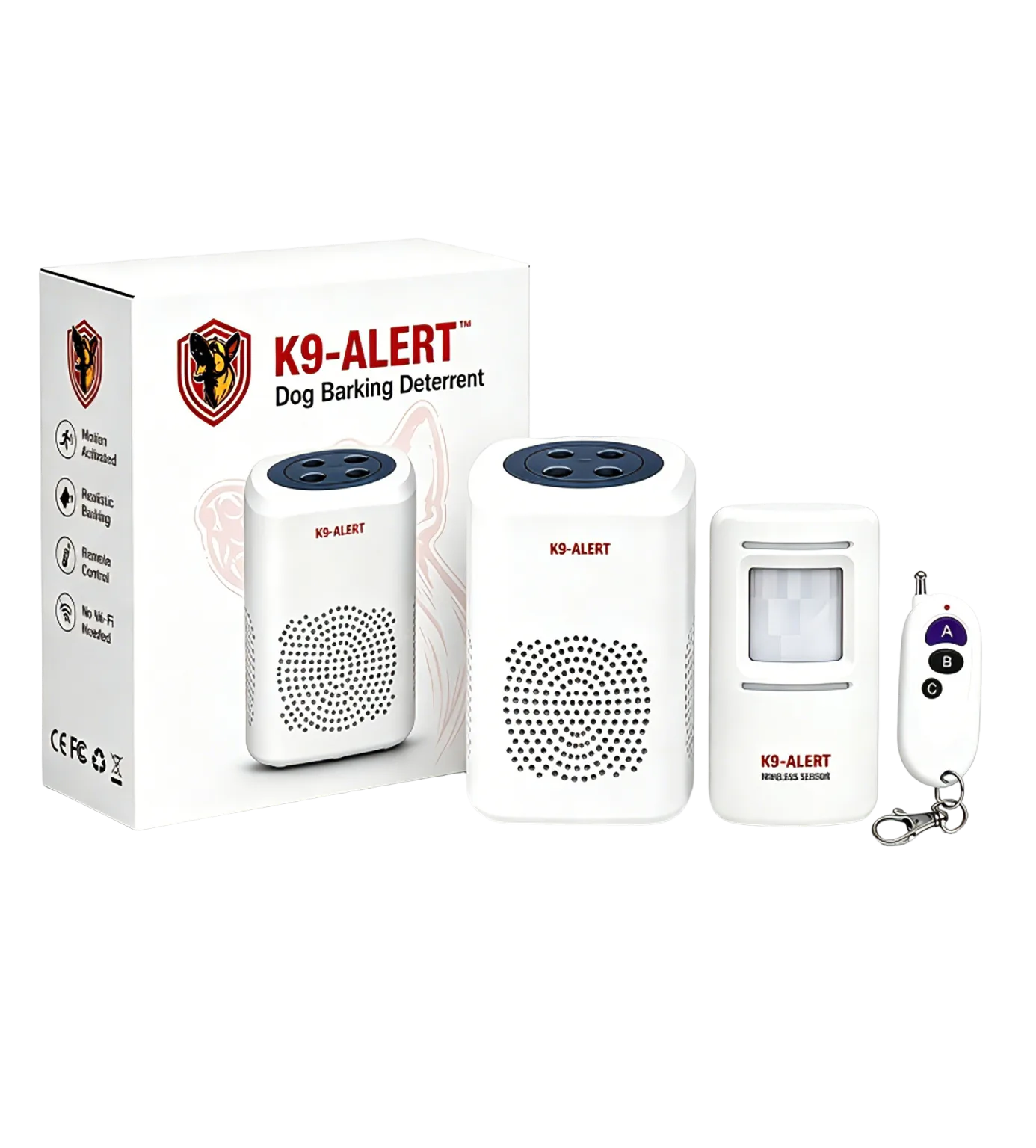
Use it where the approach starts
The practical placement is before the door, not after entry. Aim the sensor across the porch, side path, garage approach, shed entry or shop access point so the bark starts while the person is still deciding.
- A$99.95 AUD: one-off package price with free AU shipping.
- Up to 110dB: adjustable realistic barking and alarm sounds.
- Risk reversal: 30-day money-back guarantee and 1-year warranty.
FAQ
Is a barking dog alarm or a security camera better for home security?
A barking dog alarm is better when the goal is deterrence before entry. A security camera is better when the goal is recording evidence after something happens. Most homes benefit from both, but if budget allows only one and prevention is the priority, start with the deterrent.
Do security cameras stop burglars?
Security cameras can discourage some offenders, but their main job is recording. Victoria Police still recommends locks, visibility, occupancy cues, lighting, alarms and cameras together. A camera that records a clear event is useful, but it is not the same as changing the offender's decision before entry.
Will a barking dog alarm work without Wi-Fi?
Yes. K9-Alert's receiver and motion sensor communicate locally, so the deterrent does not need Wi-Fi, an app or a cloud plan. That makes it useful for garages, sheds, rentals and entry points where a camera may be awkward, offline or too expensive to monitor.
Should I use both a camera and a barking dog alarm?
Use both if your budget allows. The clean setup is deter first and record second: the barking alarm makes the property sound occupied at the approach, while the camera records anything that still happens. The two tools solve different parts of the security problem.
Sources
- Australian Bureau of Statistics, Crime Victimisation, 2024-25
- Australian Institute of Criminology, Reports of burglary by DUMA detainees in Western Australia
- Victoria Police, Prevent home burglaries
- ACT Policing, Man charged following burglary in Bonner
See the barking dog alarm in action
Product claims are easier to judge when you can hear the device. This short demo shows the K9-Alert barking dog alarm detecting movement and playing realistic barking, so you can assess the sound before deciding where it fits in your home, garage, shed or rental.