
Quick answer: A real dog is usually the stronger burglar deterrent when it barks reliably. In an Australian Institute of Criminology study, 61.4% of active burglars cited a dog as a deterrent, compared with 49.1% for working alarm systems. Choose a barking dog alarm when you need a low-maintenance, no-pet sound layer.

At a glance: which option fits your situation?
If you want a pet, a real dog may also improve security. If you only want an entry-point deterrent, a barking dog alarm is usually the more practical purchase.
| Situation | Better fit | Reason |
|---|---|---|
| You want companionship and can handle care | Real dog | The animal is real, unpredictable and personally valuable beyond security. |
| You rent, live in an apartment or cannot keep pets | Barking dog alarm | No pet approval, no permanent wiring and no daily care. |
| You need garage, shed or side-entry coverage | Barking dog alarm | You can aim the sensor exactly where movement starts. |
| You need evidence after an incident | Camera plus deterrent | A barking cue deters; a camera records. They solve different problems. |
Which deters burglars better: a real dog or a barking dog alarm?
A real dog wins on pure deterrence because 61.4% of active burglars in the Australian Institute of Criminology DUMA study named a dog as a deterrent, while 49.1% named working alarm systems. A barking dog alarm wins when cost, rental rules, care burden and predictable placement matter more.
The honest answer is not "dog good, alarm bad." Burglars avoid signs that increase detection risk. A barking dog is powerful because it says the property may be occupied, watched or harder to enter quietly. A barking dog alarm is useful because it creates that same sound cue at the exact entry point you want to protect.
That distinction matters. A real dog is a living companion with needs. A barking dog alarm is a security device. If you want a pet, a dog can add deterrence. If you only want a deterrent, buy security equipment, not an animal.
How did we compare both options?
We compared six practical factors: offender deterrence, reliability, cost, control, neighbour impact and setup. The latest ABS Crime Victimisation 2024-25 release estimated that 1.8% of Australian households experienced a break-in and 2.0% experienced an attempted break-in, so early deterrence is the central test.
For evidence, we prioritised official Australian crime data, criminology research and police prevention guidance. We also included animal welfare and cost sources because "get a dog for security" is not a small purchase decision. It is a long-term responsibility.
Stronger natural deterrent
The stronger raw burglar deterrent when barking, presence and unpredictability are real.
- AIC signal: 61.4% of active burglars cited a dog as a deterrent.
- Best strength: feels real because it is real.
- Main trade-off: high cost, care, training and neighbour impact.
More practical security layer
Better when you want the bark cue at a chosen doorway, garage, shed or side entry without owning a pet.
- Core value: motion-triggered sound exactly where movement starts.
- Setup: no Wi-Fi, no app, no hub and no monthly fee.
- Main trade-off: relies on good placement and layering.
Choose by situation
The right choice depends on whether you want a pet or a controllable entry-point deterrent.
- Choose a real dog: you want companionship first and can handle long-term care.
- Choose a barking dog alarm: you need rentals, garages, sheds, shops or side entries covered.
- Choose both: only when they fit a broader layered security plan.
Why do real dogs deter burglars?
Dogs deter because they add uncertainty, noise and detection risk. In the AIC study, burglars said a dog did not need to be large or dangerous; the barking itself mattered because it could draw attention. That explains why a small, vocal dog can still influence a target decision.
There is also a timing advantage. The same AIC report found that three-quarters of participants took less than five minutes to enter a property, and 46.0% stayed inside for five to 15 minutes. A dog that barks early can interrupt that fast decision cycle.
The weakness is reliability. Some dogs sleep through movement. Some bark at everything, which teaches neighbours to ignore the noise. Others are friendly, anxious, old, hearing-impaired or kept too far from the entry point to influence the approach.
What does a barking dog alarm do better?
A barking dog alarm is better at controlled placement. Victoria Police advises making a home look occupied and harder to enter unseen, while ACT Policing recommends signs for alarms or dogs and sensor lights that turn on with movement. A motion-triggered barking device supports that same "someone may be home" signal.
The practical advantage is repeatability. You can aim the motion sensor at a porch, side gate, garage access, shed door or shop entry, then place the receiver where the bark carries outward. You are not relying on whether a dog happens to be awake, nearby or willing to bark.
K9-Alert is built for that narrow job. It uses a wireless motion sensor, receiver and remote control. It works without Wi-Fi, an app, a hub or a subscription, and it can be moved between spaces when your risk changes.
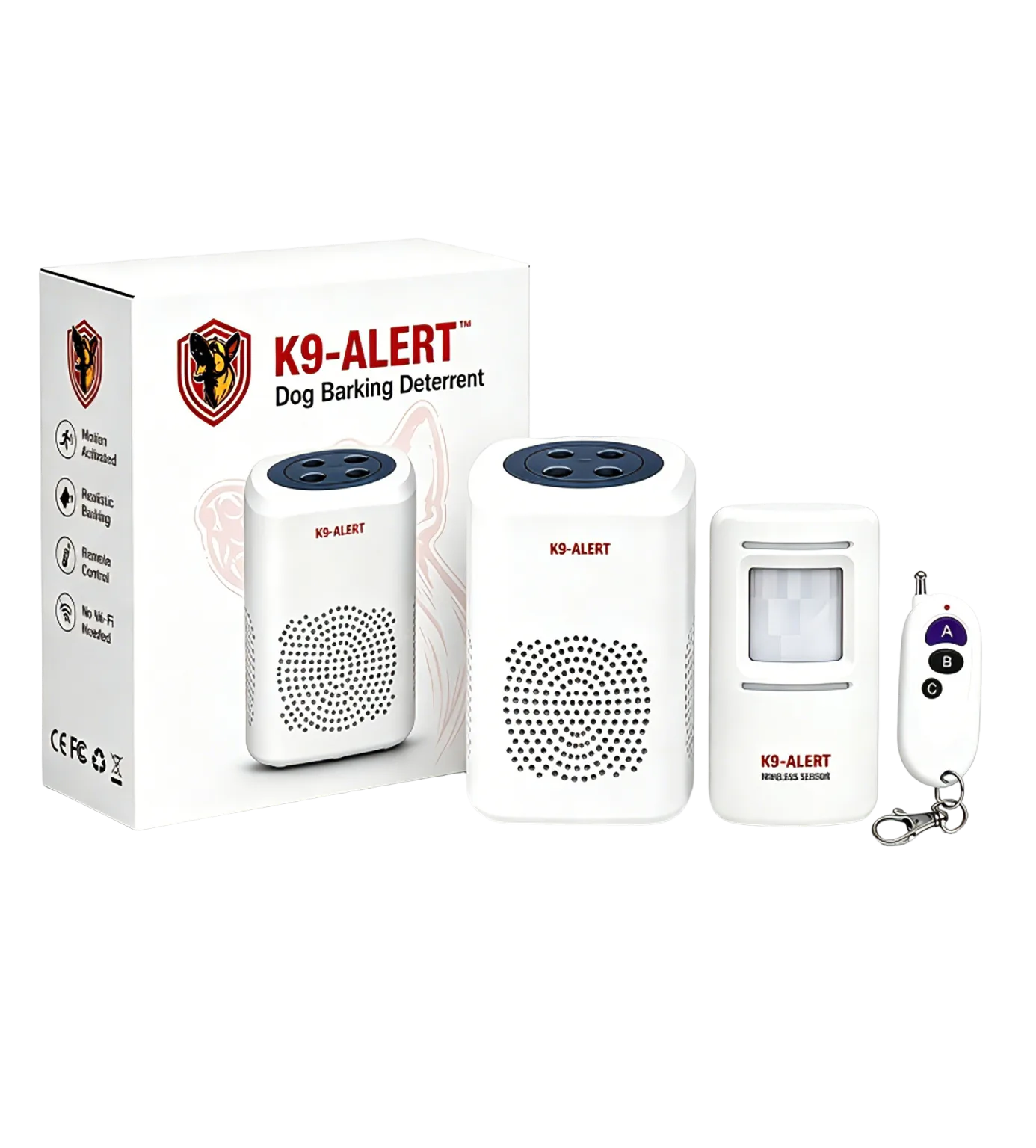
Want the dog-bark cue without owning a dog?
Don't want the cost, care or commitment of owning a dog? K9-Alert gives you the dog-bark deterrent cue at the exact entry point you want to protect, with no Wi-Fi, no app and no monthly fee.
- Place it where it matters: front doors, garages, sheds, side entries, rentals and shop access points.
- Control it easily: wireless motion sensor, receiver and remote arm or disarm control.
- Move it as needed: shift protection when your layout or risk changes.
Why do placement and layering matter more for a barking dog alarm?
Placement matters because a barking dog alarm works best when the bark sounds like it comes from an occupied, protected space. UNC Charlotte research on 422 convicted burglars found that offenders considered alarm signs, alarms, dogs inside and surveillance when choosing targets, so credibility and layering are the fix.
A real dog can move, react to unusual noise, and behave unpredictably. A device cannot chase, identify or physically block someone. That means the sound needs to trigger early, carry outward and feel connected to the door, garage or shed being protected.
Pair it with locked doors and windows, motion lighting, visible house numbers, trimmed cover and sensible storage of keys, tools and valuables. The bark should support other signs that the property is watched and harder to approach quietly.
What about cost, care and neighbour impact?
Cost is where the comparison changes sharply. RSPCA NSW cites the Australian Veterinary Association figure that the average dog owner spends more than A$25,000 on care, with first-year dog costs estimated at A$1,979 to A$3,001. A barking dog alarm is a device purchase, not a 10- to 20-year care commitment.
Dogs also need training, exercise, shelter, food, vet care and daily attention. The NSW EPA warns that excessive barking can disturb neighbours and may reflect welfare problems such as boredom, poor exercise, sickness or unsuitable conditions.
A barking dog alarm still needs considerate use. Aim it away from busy footpaths, trees, shared driveways and neighbour-facing windows. The goal is a credible entry-point cue, not a device that trains everyone nearby to tune it out.
Which should you choose?
Choose a real dog if you want a companion first and a deterrent second. Choose a barking dog alarm if you want an affordable, controllable sound layer for a specific entry point. ABS data shows break-ins and attempted break-ins affected hundreds of thousands of Australian households in 2024-25, so either choice should sit inside a wider prevention plan.
Best fit by situation
- Owner-occupier who wants a dog: a real dog may add the strongest natural deterrent, provided care and training are right.
- Renter or apartment resident: a barking dog alarm is usually simpler because it avoids pet approvals and permanent wiring.
- Shed, garage or shop entry: a barking dog alarm is easier to place exactly where movement starts.
- High-risk property: use neither as the only layer; add locks, lighting, cameras, alarms and professional advice.
How should you set up a barking dog alarm for best results?
Placement matters because AIC offenders most often described fast, opportunistic entry, with 66.2% typically entering through unlocked doors or windows. Put the sensor where movement begins before the protected point, not deep inside the protected room.
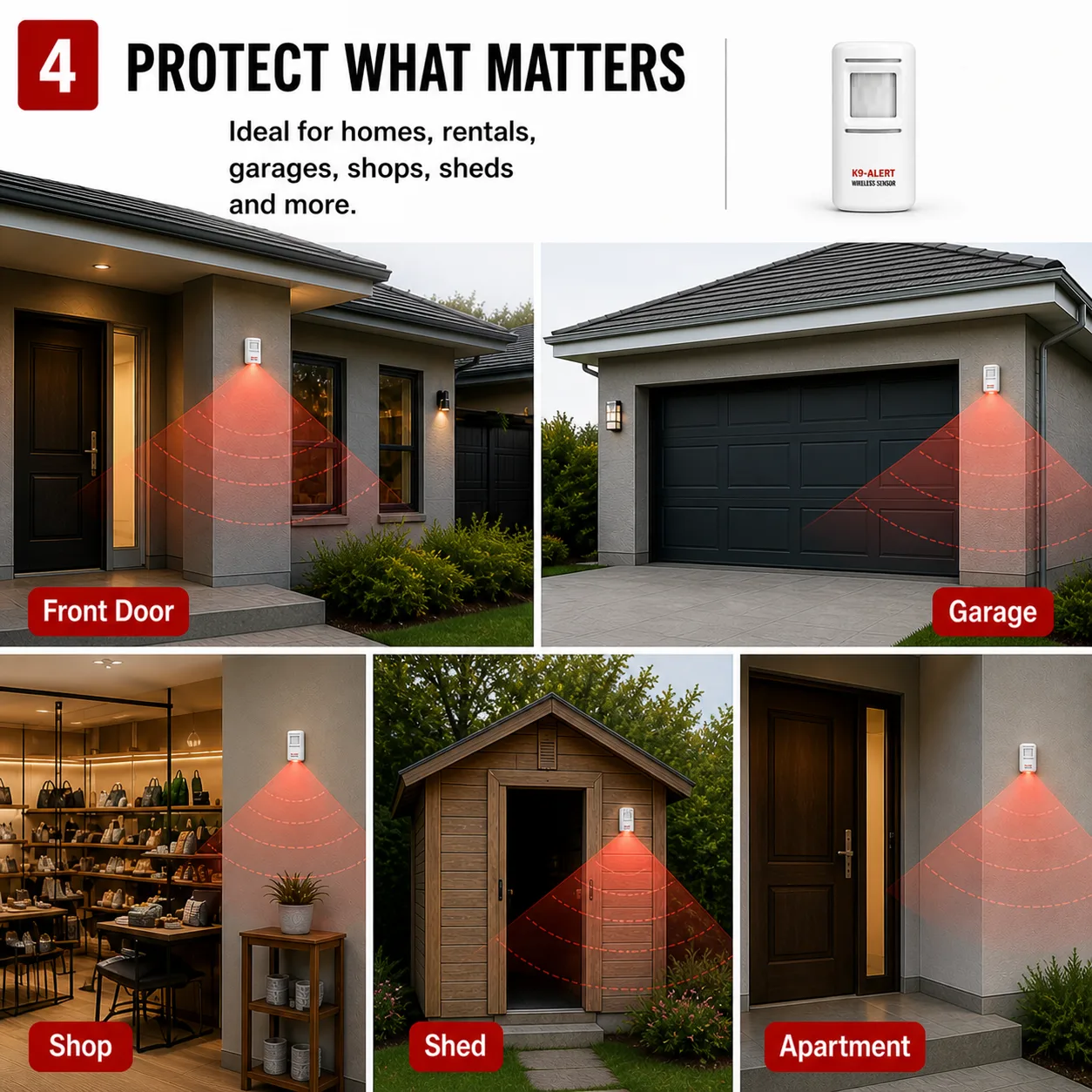
- Cover the approach: front porch, garage side door, shed path, shop entry or driveway edge.
- Keep the receiver protected: place the sound source inside or under cover so it is not easy to grab.
- Reduce false triggers: avoid busy public paths, moving branches, pets and direct neighbour-facing angles.
- Layer it: add locks, lighting and visibility so the bark supports other signs of active security.
- Test it at night: confirm the sound carries to the approach without becoming a neighbourhood nuisance.
Protect your front door, garage or shed with a motion-triggered barking alarm.
No Wi-Fi. No app. No subscription. Set it up in minutes and place the dog-bark deterrent cue exactly where movement starts.
FAQ
Do barking dog alarms really deter burglars?
They can deter some opportunistic burglars because they create the sound cue that someone or something may be inside. They work best before contact with a door, shed or garage, and they should be combined with locks, lighting and visibility.
Is a real dog better than a barking dog alarm?
For raw deterrence, yes. A real dog that barks reliably is more convincing than a device. For cost, control, rental suitability and targeted entry-point coverage, a barking dog alarm is often the more practical security layer.
Can burglars tell a barking dog alarm is fake?
Some may, especially if the sound repeats unnaturally or the receiver is visible. Placement and layering are the fix. Put the receiver where the bark sounds like it comes from inside the property, then pair it with lighting and normal security signs.
Does K9-Alert replace locks, cameras or a monitored alarm?
No. K9-Alert is an audible deterrent layer. It is designed to make an entry point sound occupied before someone reaches it. Keep using practical security basics such as locks, lighting, visibility, cameras where appropriate and insurance.
Sources
- Australian Bureau of Statistics, Crime Victimisation 2024-25
- Australian Institute of Criminology, Reports of burglary by DUMA detainees in Western Australia
- UNC Charlotte, Researcher Expands Knowledge of What Motivates, Deters Burglars
- Victoria Police, Prevent home burglaries
- ACT Policing, Home Security
- Neighbourhood Watch SA Police, Home security technology
- RSPCA NSW, Cost of Owning a Pet
- NSW EPA, Dealing with barking dogs
See the barking dog alarm in action
Product claims are easier to judge when you can hear the device. This short demo shows the K9-Alert barking dog alarm detecting movement and playing realistic barking, so you can assess the sound before deciding where it fits in your home, garage, shed or rental.