
TL;DR: Australian households reported 196,600 break-ins and 217,500 attempted break-ins in 2024-25 (ABS, 2026). When you are away for days or weeks, reduce the empty-home signal: mail, bins, curtains, lights, garden care, keys, garage access, social posts and sound at the approach.

Why do empty-home cues matter?
In 2024-25, 1.8% of Australian households experienced a break-in and 2.0% experienced an attempted break-in (ABS, 2026). The practical lesson is simple: prevention needs to happen before entry, while a person is still deciding whether this address looks quiet, easy and unoccupied.
Burglary-prevention research describes target choice as a mix of occupancy, visibility, access, vulnerability and reward. The ASU Center for Problem-Oriented Policing says most burglars avoid occupied houses, that time away from home is a strong predictor of risk, and that accumulated mail can signal nobody is home (ASU POP Center).
Victoria Police gives the same advice in plain terms: secure the property, secure valuables, make it look like someone is home when you are out or away, and make it harder for thieves to get in unseen (Victoria Police). That is the structure of this checklist.
Who needs an occupied-home routine?
ABS recorded 414,100 household break-in or attempted break-in experiences in 2024-25 when the two categories are read together (ABS, 2026). The routine is for any home that will look unattended long enough for mail, bins, lighting, garden growth or parked-car patterns to become obvious.
This is broader than a normal holiday checklist. Australians leave homes empty for many reasons: overseas trips, long business travel, FIFO or roster work, family visits interstate, extended medical or caring absence, temporary moves overseas, a rental sitting vacant between tenants, or a holiday home that is only used some weekends.
Each scenario creates a different tell. A FIFO worker may have a predictable two-week pattern. A vacant rental may have no bin movement and no evening lights. A holiday home may have closed curtains for weeks. A family overseas may have parcels at the door. The fix is to remove the signal that applies to your address.
Which visual cues should you fix first?
Victoria Police advises residents to make a house seem occupied when they are away, including asking someone to collect mail, move bins, park in the driveway and maintain the garden (Victoria Police). Start with the cues visible from the footpath because those are assessed before anyone touches a gate, door or window.
| Cue | What it can signal | Practical fix |
|---|---|---|
| Mail, junk mail or parcels | Nobody has checked the property for days. | Use a mail hold or neighbour collection routine. Redirect parcels before you leave. |
| Bins left out or never put out | The normal weekly pattern has stopped. | Ask a neighbour to move bins on collection day, even if they are empty. |
| Closed curtains all day | The home is staged for absence, not normal life. | Leave street-facing rooms looking normal while hiding valuables from view. |
| No lights after dark | The home is empty through the evening approach window. | Set two interior lamps on varied timers, plus motion lighting outside. |
| Untouched lawn or garden | The owner has not attended the property recently. | Mow before departure and arrange garden care for longer absences. |
| Empty driveway every day | There is no normal arrival or departure pattern. | Ask a trusted person to park there occasionally if safe and practical. |
Do not overcorrect. A house with every blind shut, all lights on at the same time and no bin movement still looks artificial. The target is ordinary life from the street: some light, some movement, no visible buildup and no obvious unattended deliveries.
How do sound cues deter before entry?
The ASU burglary guide says houses that appear occupied, including those with visible activity or audible noises from within, are less likely to be broken into (ASU POP Center). That matters because cameras usually help after the event, while sound can change the decision before entry.
A doorbell camera can record a person walking up the path. That is useful for police, insurance and review. But if the person already believes the home is empty, the camera may only document the approach. For long absences, the stronger prevention move is to make the approach feel uncertain.
That is where a motion-triggered barking layer fits. K9-Alert is a no-Wi-Fi, no-subscription sound deterrent at A$99.95. You place the wireless sensor near a front path, side gate, garage or back entry, then place the receiver inside so the bark reads as coming from the home. It does not need an app, router or monitoring plan while you are away.
Use it with visual layers, not instead of them. Lights and neighbour routines remove the empty-home look. The barking response adds the sound of occupancy when someone moves into the approach zone. Together, they make the property less predictable and less quiet.
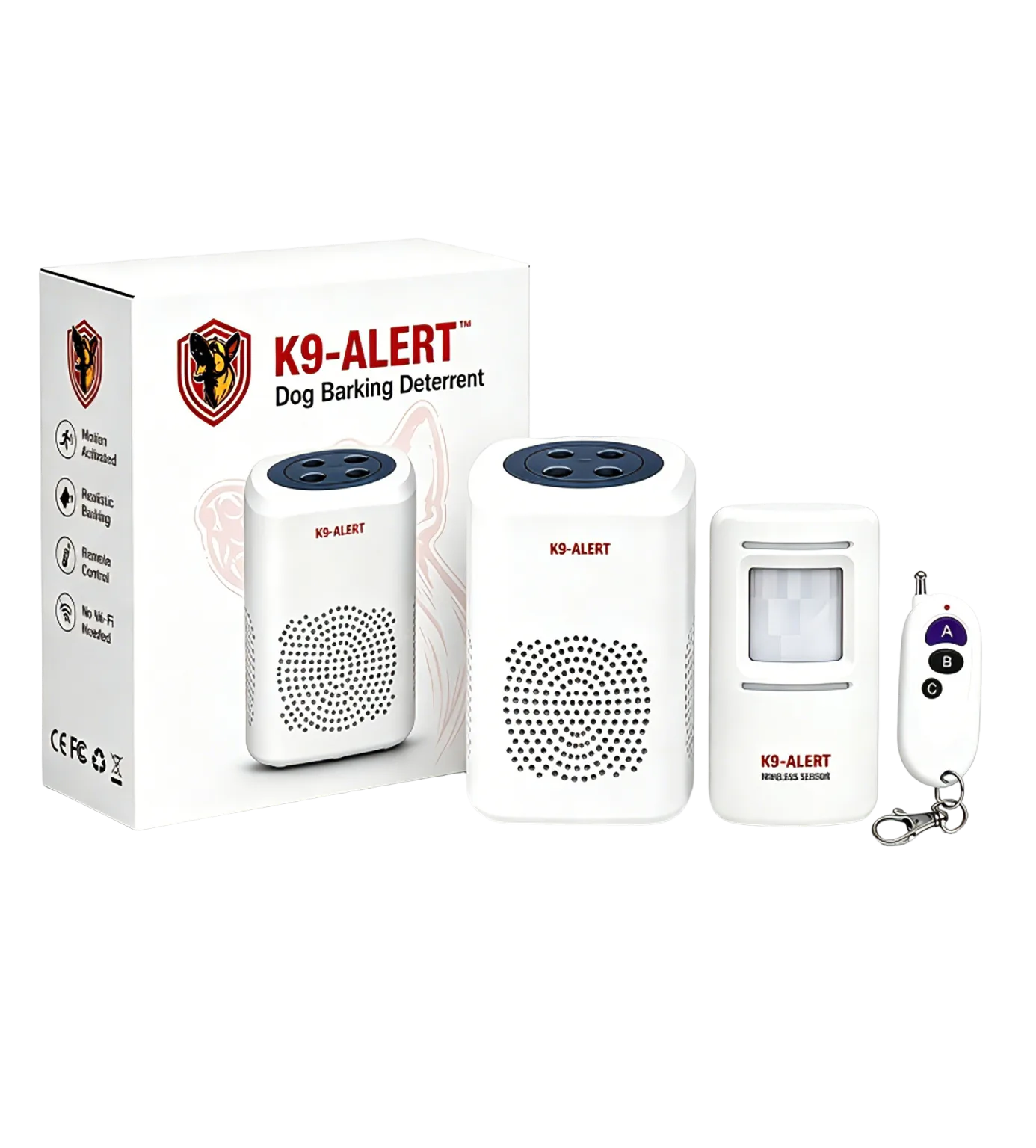
No Wi-Fi, no app, no subscription while you are away.
Arm K9-Alert before you leave. The wireless sensor watches the approach and triggers a realistic bark inside the property when movement is detected near the protected entry point.
- A$99.95 kit: receiver, wireless sensor and remote control.
- Portable: useful for homes, rentals, garages, sheds and holiday homes.
- Expandable: add extra sensors for side gates, back doors or garages.
What should neighbours, mail and bins cover?
Victoria Police specifically lists mail collection, bin movement, occasional driveway parking and garden care as ways to make a house seem occupied while away (Victoria Police). Give one trusted person a simple written routine, not a vague "keep an eye on it" request.
For an overseas trip or extended family visit, ask for a check every two or three days. For FIFO or roster work, build a repeatable rhythm around bin night and mail. For a vacant rental, ask the property manager to remove flyers, clear the mailbox and check that curtains, doors, meters and gates look normal between inspections.
For a holiday home, the main risk is long stretches of no change. Ask a local cleaner, neighbour or property manager to vary the visible state: bins in place, windows normal, garden maintained, no obvious piles near doors and no ladders or tools left outside.
Give your helper this exact routine
- Mail: clear letterbox and junk mail before it is visible from the street.
- Bins: put bins out and bring them back on the normal schedule.
- Driveway: park there occasionally if you both agree it is safe.
- Garden: mow or water if the absence runs longer than a normal trip.
- Doorstep: remove parcels, menus and delivery notices quickly.
- Call trigger: contact you if a gate, window, light or door looks different.
What about keys, garages and social media?
ABS found that in the most recent break-in, 69% of affected households had something stolen and 44% had property damaged (ABS, 2026). Occupancy cues help reduce approach risk, but the property still needs basic hardening if someone tries anyway.
Remove spare keys from obvious spots. Do not leave keys in window locks. Victoria Police also advises locking doors, windows, gates, sheds, pet doors, skylights, mailbox access and garage doors (Victoria Police). For many Australian homes, the internal garage door deserves the same attention as the front door.
Social media is part of the same routine. Do not announce a two-week overseas trip, a FIFO swing or a temporary move while the property is empty. Post travel photos after you return. If you need to coordinate with family, use private messages rather than public posts or broad local groups.
For cars and garages, move keys away from entry points and keep garage remotes out of vehicles left outside. If a burglar gets into a car parked in the driveway, a garage remote can turn a driveway incident into a home-entry path.
Do and don't checklist
Use this checklist in the 48 hours before you leave and again for any absence longer than a normal weekend. It prioritises the cues that police and burglary-prevention research both point to: occupancy, visibility, access, mail and sound from inside the home.
| Do this | Do not do this | Why it matters |
|---|---|---|
| Set two lamps on varied timers. | Leave the whole house dark every night. | Evening darkness is an easy absence cue. |
| Ask a trusted person to clear mail and bins. | Let junk mail, parcels or bins build up. | Visible buildup says nobody is checking the home. |
| Leave curtains looking normal from the street. | Close every curtain all day for weeks. | A frozen window pattern can look staged for absence. |
| Lock side gates, sheds and the internal garage door. | Only lock the front door. | Long absences give people time to try quieter entries. |
| Use a sound deterrent on likely approach points. | Rely only on recordings after the fact. | Sound can affect the decision before entry. |
| Post travel photos after you return. | Broadcast your exact absence dates publicly. | Public timing makes an empty home easier to identify. |
Scenario notes for longer absences
Attempted break-ins affected 217,500 Australian households in 2024-25, and the most common evidence included a damaged or tampered door or window or someone seen or heard trying to break in (ABS, 2026). Match your setup to the way your home will look during your specific absence.
- Overseas trips: stop mail, redirect parcels, vary lights, brief a neighbour and do not post live travel updates.
- Business travel: cover predictable weekday patterns with lights, bin movement and driveway activity.
- FIFO or roster work: use a repeatable FIFO home security handoff, then vary timers and neighbour activity so the roster does not advertise an empty home.
- Family or medical absence: assign one person to check the property rather than assuming relatives will notice.
- Temporary overseas move: arrange garden care, insurance checks, mail handling and periodic internal inspections.
- Vacant rental: remove flyers, keep the yard presentable and check that doors, windows and meters look normal.
- Holiday home: use local help to vary the property and add sound deterrence at the main entry.
Make the approach feel occupied.
K9-Alert adds a no-Wi-Fi barking response at the door, garage, side gate or holiday-home entry while you are away. Use it with lights, mail collection and neighbour routines for a stronger long-absence setup.
Order K9-Alert · $99.95Frequently asked questions
How do I make my home look occupied while away in Australia?
Use layers that remove absence cues: mail collection, bins moved on schedule, varied interior lights, normal garden care, locked entry points and a sound cue near the approach. Victoria Police advises making the house seem occupied even when away.
Why does a longer absence increase burglary risk?
Longer absences create repeated vacancy signals. The ASU burglary prevention guide says time away from home is a strong burglary-risk predictor, and signs such as accumulated mail can indicate nobody is home.
Is a security camera enough when I am overseas or away for weeks?
A camera is useful evidence after an incident, but it is not the same as deterrence before approach. For long absences, combine visible occupancy routines with a motion-triggered sound layer at doors, garages and side entries.
Where should a barking dog alarm go when the home is empty?
Place the wireless sensor where a person would approach first: front path, side gate, back door or garage entry. The receiver should sit inside where the sound reads as coming from the home, not from outside.
See the barking dog alarm in action
This short demo shows the K9-Alert barking dog alarm detecting movement and playing realistic barking. It is included here so you can judge the sound layer before deciding where it fits in a long-absence setup.