
TL;DR: Do not go outside or confront anyone. Call 000 for immediate danger, injury or a crime happening now; seeing an unfamiliar person is not by itself the test. Use local police non-emergency channels for a past or non-urgent concern. Lights or alarms do not establish that it is safe to investigate.
What should you do right now?
Stay inside or move to a safe place without approaching the noise. If someone is threatening you, trying to enter, or a crime is happening now, call 000. You do not have to see the person clearly to report an immediate danger. Follow the call-taker's instructions.
- Keep distance. Do not open an external door or go into the yard to check. If the house itself is unsafe, use a safe route away from the threat if one is available.
- Keep your phone with you. Give emergency services your location and what you actually heard or saw. Do not guess someone's intentions or identity.
- Use existing controls only if safe. You may switch lights on or view an existing camera without moving toward windows or opening the door. Neither step is required before calling for help.
- Keep others safe. Tell household members where to stay. A trusted contact can support you, but do not ask a neighbour to confront or search for someone.
- For a non-urgent concern, contact local police. In Victoria, 131 444 or online reporting handles eligible non-urgent reports. Elsewhere check your state or territory police reporting service. No patrol or attendance time is promised.
Victoria Police distinguishes a crime in progress or immediate danger from a past incident and advises against confronting a thief. If a handle was tried, use the attempted-door safety guide. After a completed break-in, follow the break-in recovery checklist once safe.
Could there be an ordinary explanation?
Wind, wildlife, loose gates, bins and neighbours arriving home can make unexpected sounds. Hearing a noise does not establish that a burglary is taking place, but you do not need to investigate outdoors to resolve that uncertainty. Base the response on signs of immediate danger and advice from emergency services.
When it is safe and daylight returns, inspect your own property for a loose latch, branch, bin lid or other source. If you find damage or signs of entry, avoid disturbing them and contact police. Note what you observed and when; do not turn speculation about passers-by into an accusation.
What can you check after the immediate concern?
First address anything that affects physical security or escape. Then check lighting and any existing detection or notification system. A local alarm may sound on suitable movement, but that does not prove an intruder has left, identify a person, or show that emergency help is on its way.
| When | Do this | Do not do this |
|---|---|---|
| Right now | Stay in a safe place; call 000 for immediate danger or a crime in progress | Go outside, open the door or confront someone |
| Tonight, if safe | Use existing locks and indoor lighting controls; keep phone and exit route available | Go into the yard to install equipment or block your only escape |
| Tomorrow morning | Record new damage, report it and arrange repairs | Handle possible evidence before police advice or assume marks prove targeting |
| Before the next night | Check doors, windows, lights, contacts and any existing alarm | Assume a new online purchase will arrive immediately |
Keep a short private record if the problem repeats: time, location, sound or visible behaviour, any damage and the report reference. Preserve existing camera footage without going outside to obtain more. That record is more useful than a conclusion such as “someone is watching the house” that you cannot verify.
How do you choose a longer-term setup?
Start with doors and windows that close and latch, and an inside exit everyone can use. Report rental repair problems through the proper channel. Keep keys and remotes away from visible or reachable entry points. An alarm can add a function; it cannot repair a frame or compensate for a door left open.
- Visibility: choose suitable lighting for steps and private approaches, without glare into neighbours' homes.
- Detection: decide whether you need a door-opening contact, movement sensor or another type. Ordinary PIR cannot see through glass or a closed metal door.
- Notification: decide whether someone must receive a phone alert. A local sound device alone cannot do that.
- Response: agree what the household or monitoring provider should do. Do not expect a neighbour to enter a potentially unsafe property.
- Usability: check hearing, mobility, pets, sleep and false-trigger effects. A loud device may be unsuitable for the room or household.
Some cameras provide live alerts, lights or sound as well as footage. Monitored alarms may provide a response process under their service terms. There is no evidence-based rule that makes barking the first or most effective device. For a calm purchase decision, compare local sound and camera capabilities only after the immediate issue is resolved.
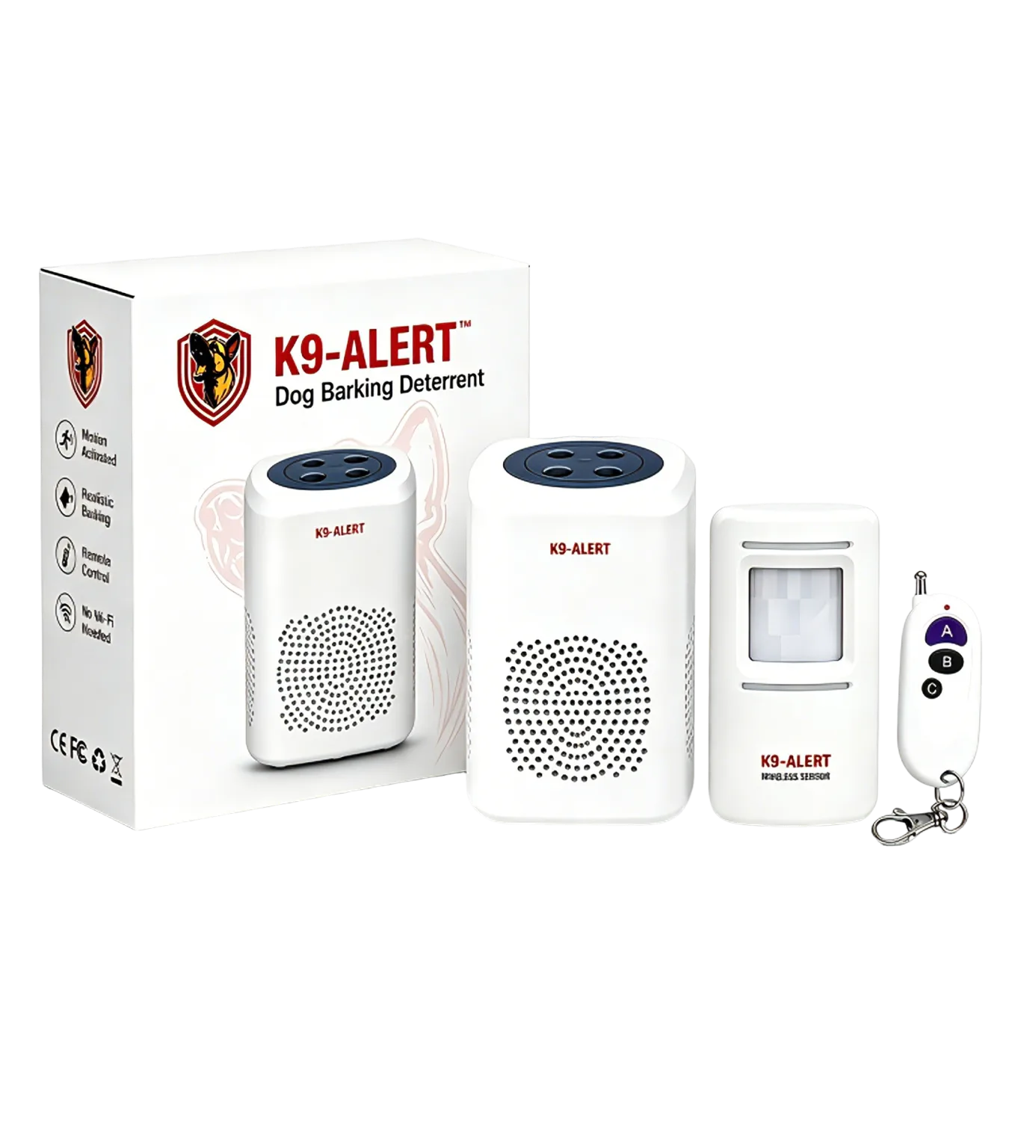
Where K9-Alert fits
The kit plays barking when its PIR detects suitable movement and its radio link reaches the powered receiver. It operates without Wi-Fi, but sends no phone alert and summons no help. Recorded barking is an intended cue, not a guarantee that someone leaves.
Test sheltered placement, the closed-door sound level, pets and false triggers in safe conditions. Follow the setup guide; do not install outside during an active concern.
Plan an optional sound layer when it is safe.
Check the A$95 kit's functions, placement and purchase terms. Delivery timing depends on the actual order; use existing safe measures for tonight.
Frequently asked questions
Should I call 000 when I hear a noise outside?
Call 000 if there is immediate danger, someone is injured, or a crime is happening now. You do not have to identify a person before seeking emergency help. A noise or unfamiliar person alone does not establish an emergency; use your local police non-urgent channel for a non-urgent concern.
Should I go outside to check the noise?
Do not go out or confront someone to investigate. Stay in a safe place, keep your phone with you and use existing indoor controls only if safe. If someone is inside or the house is unsafe, follow emergency-service advice and move away from the threat using a safe route if available.
Will a barking alarm stop someone coming back?
No device can promise that. A local alarm may create sound on detection, but cannot identify who is outside, confirm they have left or summon help. Repair weak entries, preserve relevant evidence and get police or specialist advice for repeated threats. Test any optional device only when conditions are safe.
Product introduction
This introduction explains the product and intended setup. It does not measure sound level, sensing range, battery life or performance at your property. Check the current instructions and test the actual placement before use.