
TL;DR: The most effective home safety measures for women living alone combine occupancy signals (making the home sound and look occupied), strong entry-point hardware, and a simple night-time routine. A motion-triggered barking alarm is the highest-impact single device because it addresses the core risk — a home that looks like no one is home.
The specific challenge of living alone
The home security challenge for anyone living alone is not unique to women — but the anxiety dimension often is. Many women living alone describe not just practical concern about break-ins, but an ongoing, low-level awareness of vulnerability that affects how they move through their home and neighbourhood, particularly at night.
This guide addresses both dimensions. The practical measures below reduce real risk. They also — deliberately — reduce the feeling of vulnerability, because knowing you have taken effective action changes the psychological experience of living alone.
The most effective devices and measures
1. Motion-activated barking alarm — the occupancy signal
A motion-triggered barking alarm is the single most effective home security device for a solo household. Here is why it matters specifically for women living alone:
- It makes your home sound occupied and protected — even when you are at work, out for the evening, or asleep. The sound of a dog in response to movement signals to anyone approaching that the property is not the easy, unoccupied target it might otherwise appear.
- It reacts before entry, not after — at the approach, before a door or window is tested. This is the critical advantage over a standard alarm, which only sounds once a threshold has been crossed.
- It requires no installation — relevant for renters who cannot modify the property. Plug in the receiver, place the wireless sensor at the entry point, and it is active.
Victoria Police specifically recommends auditory dog cues as a deterrent, noting that properties appearing to have a dog are far less likely to be targeted. A barking alarm makes this active and motion-responsive.
2. A security screen door on the front entry
A security screen door — the kind with a heavy metal mesh and a strong latch — allows you to open your front door to identify a caller without opening the main door. This is practical safety, not just security theatre: it means you can check who is at the door before deciding whether to open it fully.
Renters can ask landlords to install one; this is a reasonable request that most landlords will agree to because it improves the property. If the landlord declines, a door chain or door viewer provides a partial alternative.
3. Motion-activated exterior lights
At the front door, back door, and any passage or gate. Motion-activated lights are more deterrent than lights on a timer because they respond to actual movement — which is unpredictable and more alarming for someone approaching with bad intent.
Install them at a height that cannot be easily reached. Solar-powered versions are available for areas without an easy power point, including back entrances and side passages.
4. Window locks and secondary entry points
Ground-floor windows, sliding doors and laundry entries are common secondary entry points. A wooden dowel or a purpose-made security bar in the track of a sliding door prevents it from being forced open even if the latch is defeated. Window pin locks are cheap and effective.
5. A simple night-time routine
A consistent routine at night replaces ongoing anxiety with a brief, deliberate check:
- Arm the barking alarm before bed (one button on the remote)
- Check the front and back door are locked
- Confirm the ground-floor windows are latched
This takes two minutes. Knowing you have done it replaces the vague "did I lock everything?" anxiety with specific knowledge.
6. Returning home at night — a practical routine
- Have your keys ready before you reach the door — do not stop at the door to find them in your bag.
- Park as close to the entrance as possible and under a light if available.
- If you feel followed or unsafe, do not go home — go to a public place, call someone, call police (000).
- Let someone know your expected return time if you are out late.
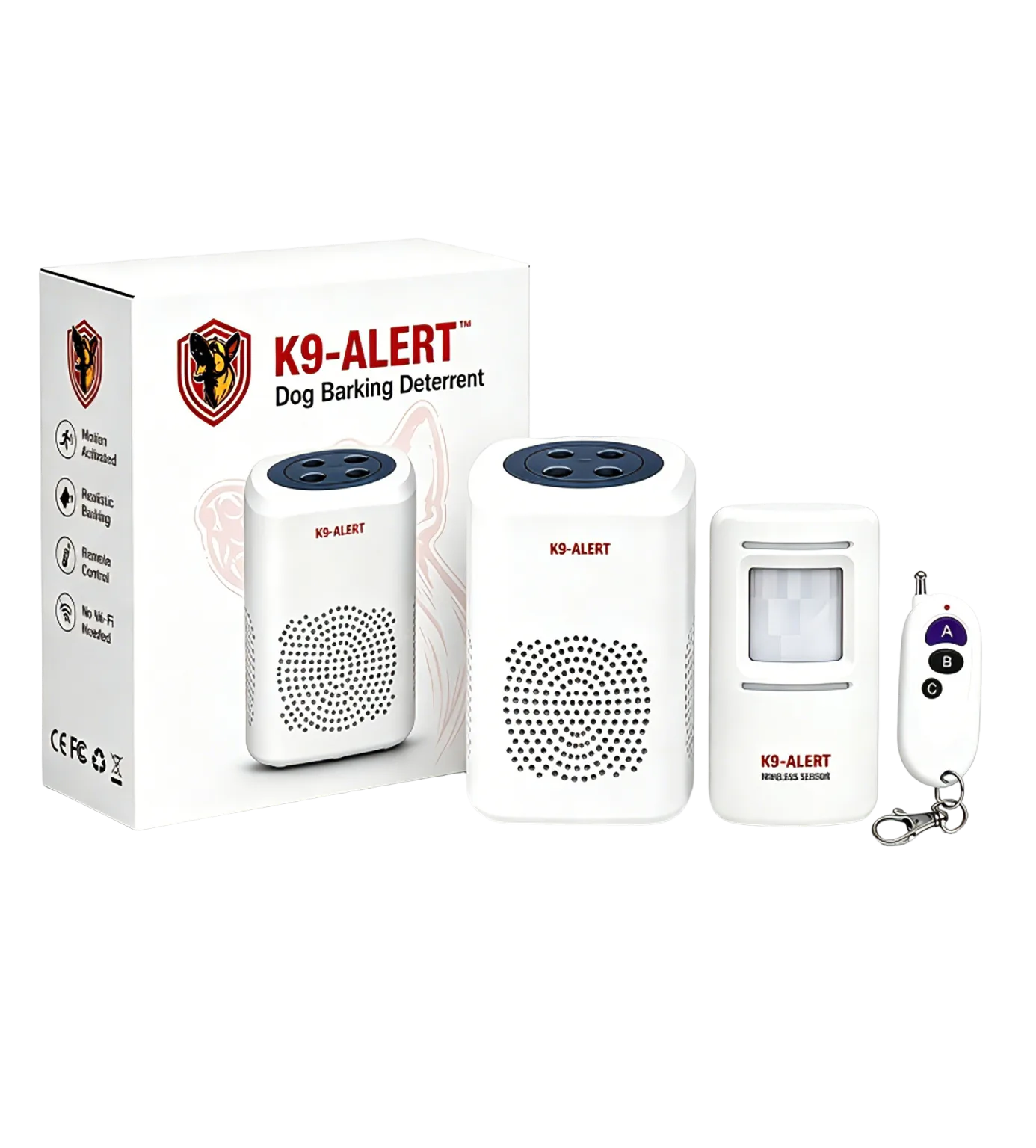
K9-Alert — motion-triggered barking, no installation.
K9-Alert is a motion-activated barking alarm designed for Australian homes. It works without Wi-Fi, an app or a monthly subscription. The wireless sensor triggers realistic dog barking the moment motion is detected at your entry point.
- No drilling, no wiring — suitable for renters and apartments.
- Remote arm and disarm — one button on your key ring.
- Adjustable volume — loud enough to be heard outside, controllable for your household.
What you do not need (and why)
Some commonly marketed security products are not the best use of money for a solo household:
- Monitored security systems ($30–50+/month): For most solo renters or homeowners, the ongoing cost is significant and the response time (police attending after monitoring centre calls) is rarely fast enough to matter for an opportunistic break-in. A deterrent that prevents entry is more valuable than a faster alert after entry occurs.
- Smart doorbells (Wi-Fi dependent): Useful for package theft and checking who is at the door, but they record incidents rather than deter them. They also depend on Wi-Fi and a charged phone — both variable. Worth having, but not a substitute for a deterrent.
- Loud siren alarms: Effective at alerting neighbours after entry, but the "siren" sound is now so common it is often ignored. A realistic dog bark is a more psychologically effective deterrent precisely because it suggests an unpredictable, active animal rather than a machine.
Make your home sound occupied — from tonight.
K9-Alert is a motion-activated barking alarm for Australian homes. No wiring, no app, no subscription. $99.95 with free AU shipping and a 30-day money-back guarantee.
Order K9-AlertFrequently asked questions
What is the best home security device for a woman living alone?
A motion-triggered barking alarm is the highest-impact single device, because it directly addresses the core risk: a home that looks and sounds like no one is home. It reacts at the approach, before a door or window is tested.
How can I make my home seem occupied when I live alone?
Combine occupancy signals: a barking alarm that responds to movement, lighting on the approach and entry points, and a consistent lock-up routine. The goal is that the property never reads as an easy, empty target.
Do I need cameras or a monitored alarm if I live alone?
Not as a first step. Occupancy signals, strong entry-point hardware and a simple night-time routine cover most of the real risk without subscriptions. Cameras add evidence later if you want them.
Does home security actually reduce the anxiety of living alone?
Yes — deliberately so. Knowing you have taken effective action changes the psychological experience of living alone, not just the statistical risk.
See the barking dog alarm in action
Product claims are easier to judge when you can hear the device. This short demo shows the K9-Alert barking dog alarm detecting movement and playing realistic barking, so you can assess the sound before deciding where it fits in your home, garage, shed or rental.