
TL;DR: A 'Beware of Dog' sign has some deterrent effect, particularly for casual passersby, but experienced opportunists know the signs are often bluffing and can test easily by approaching. An active deterrent — something that actually responds to their approach — is significantly more convincing. Victoria Police recommends this principle explicitly. A motion-triggered barking alarm is the active version of what a sign only claims.
Why dog signs deter at all
The deterrent logic of a 'Beware of Dog' sign rests on a real foundation. Dogs are among the most consistently cited deterrents in residential burglary research. The Australian Institute of Criminology's surveys of offenders have found that the presence of a dog was a significant factor in target rejection — particularly for opportunistic burglars who want a quick, low-noise entry.
A sign that signals a possible dog raises the perceived risk of a property — someone who sees it may simply move on to an easier target. That is not nothing.
Where signs fall short
The problem with a sign is that it is static and easily tested. An experienced opportunist — not a careful planner, just someone who has done this before — knows the following:
- Signs are very commonly bluffing. Cheap 'Beware of Dog' signs are widely available and frequently used by households without a dog. Any regular burglar knows this.
- The test is easy and low-risk. Making a noise near the fence — knocking, rattling — takes two seconds. A real dog responds. Silence means there is probably no dog.
- A sign that is contradicted by silence defeats itself. A sign saying there is a dog, combined with no dog response to approach, is actually a confirmation that the sign is bluffing.
Victoria Police addresses this directly in their home-burglary prevention guide. They recommend leaving out a dog bowl or lead even without a real dog — not just a sign. The point is that a dog cue works; a passive written claim is weaker. The difference is whether the property appears to have a dog, not just claims to have one.
The active version: a motion-triggered barking alarm
A motion-triggered barking alarm does what a sign cannot: it actually responds. When someone approaches your entry point, it barks. The difference in deterrent psychology is significant:
- A sign says "there might be a dog here."
- A barking alarm proves "there is something responding to you right now."
From outside the property, an intruder cannot tell whether the bark is from a real dog or a device. They have no safe way to test it further — a real dog that has been triggered may get louder, may alert the household, and may create noise that attracts a neighbour. The rational response is to move on.
Passive claim
Signals a possible dog. Can be tested with a quiet approach. If no dog responds, the bluff is called. Effective only with those who don't test.
Active response
Responds directly to approach. Cannot be tested silently — any approach triggers the response. Cannot be proven fake without entering, which creates the very noise and risk the intruder is avoiding.
Can you use both?
Yes, and there is a small reason to. A sign visible from the street may deter the most casual passersby before they even approach. An alarm responds to those who get closer. Using both creates a consistent narrative: this property has a dog, and the dog confirms it when you approach.
However, if you can only invest in one, the alarm is the more effective deterrent because it cannot be silently tested — which is the main weakness of a sign alone.
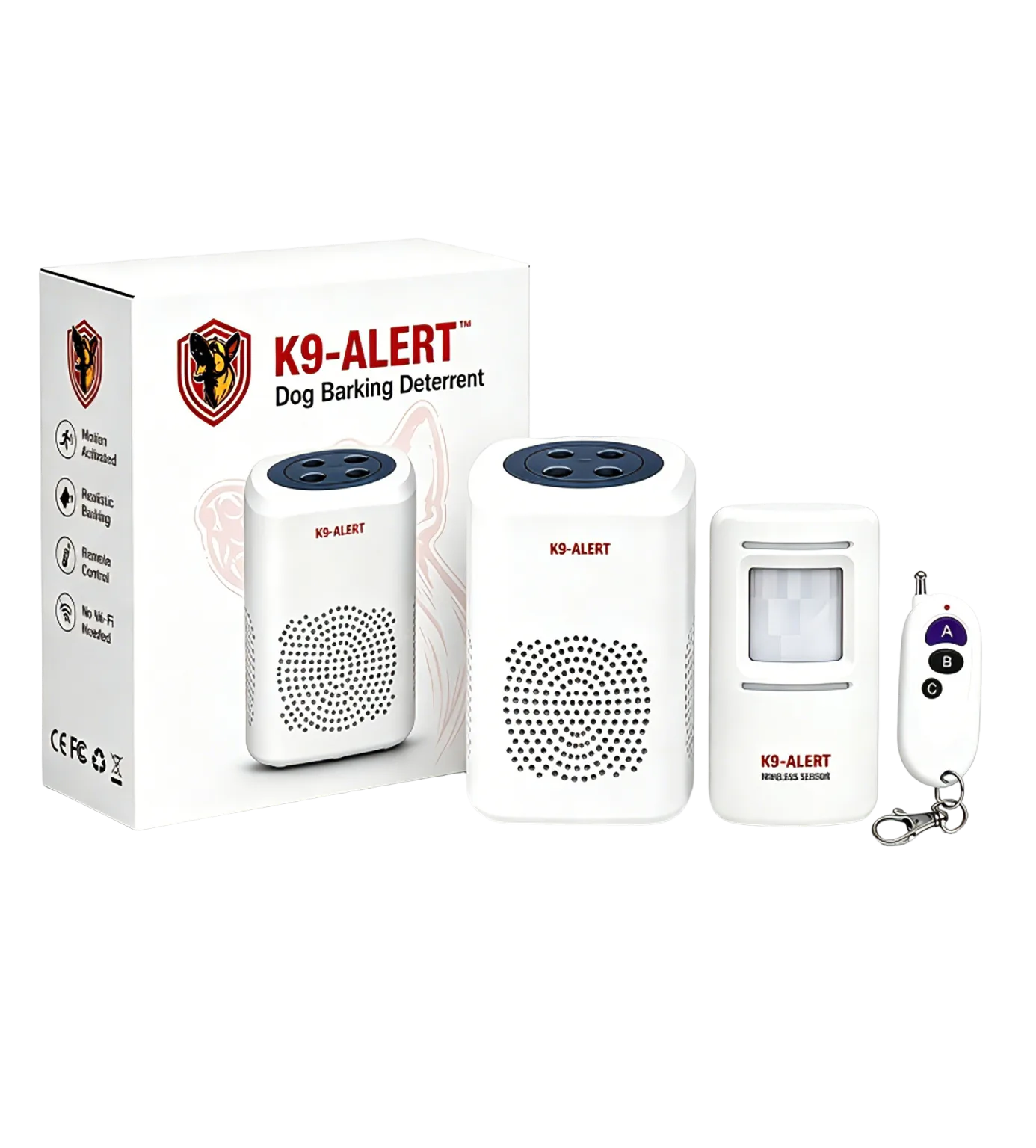
Not just a sign. A response.
K9-Alert is a motion-triggered barking alarm. When someone approaches your entry point, it barks — automatically, without you doing anything. It cannot be silently tested. No Wi-Fi, no app, no monthly fee.
- Responds to approach — not to entry, not to a timer, not to a button push.
- Realistic dog bark — the sound that actually deters, not a siren or a beep.
- No installation required — suitable for renters and apartments.
The active version of the dog deterrent.
K9-Alert is a motion-activated barking alarm for Australian homes. $99.95 with free AU shipping and a 30-day money-back guarantee.
Order K9-AlertFrequently asked questions
Do 'Beware of Dog' signs deter burglars?
Partly. A sign raises perceived risk for casual passersby, but experienced opportunists know signs are often bluffing, because cheap 'Beware of Dog' signs are widely used by households without a dog.
How do burglars test whether a dog sign is real?
By making a noise near the fence — a knock or rattle takes two seconds. A real dog responds; silence tells them there is probably no dog, and the sign defeats itself.
What is more effective than a 'Beware of Dog' sign?
An active deterrent that responds to approach. A motion-triggered barking alarm is the active version of what a sign only claims: barking starts when someone enters the detection zone and cannot be silently tested.
Should I use a dog sign and a barking alarm together?
Yes. A street-visible sign deters the most casual passersby, and the motion-triggered bark confirms the story when someone approaches. If you can only invest in one, choose the alarm.
See the barking dog alarm in action
Product claims are easier to judge when you can hear the device. This short demo shows the K9-Alert barking dog alarm detecting movement and playing realistic barking, so you can assess the sound before deciding where it fits in your home, garage, shed or rental.