
TL;DR: Call police first (do not go inside), document everything before touching anything, fix the entry point that night, contact your insurer with the police event number, tell trusted neighbours, add a visible deterrent immediately, and give yourself time to recover. The highest-risk period for a repeat incident is the first few weeks — act on the security upgrade quickly.
Step 1: Do not go inside — call police first
If you return home to find signs of a break-in, do not enter the property. An intruder may still be inside. Stay outside at a safe distance.
- If you believe someone is still inside: Call 000 immediately.
- If the property is clearly empty: Call 131 444 (police non-emergency line) and wait for attendance.
Once police confirm the property is clear and it is safe to enter, do not touch or move anything before they have had the opportunity to look for evidence.
Step 2: Document everything before you touch anything
Once police have attended and given you the go-ahead, take photographs of everything before you clean up or rearrange:
- The entry point (door frame, window, lock mechanism)
- Every room that was searched — drawers opened, items moved
- Any damage to property or belongings
- What is obviously missing (do your best — a full list will come later)
Write down the police event number. You will need it for your insurance claim and for any follow-up with police.
Step 3: Fix the entry point that night
Do not sleep in the property if there is an unsecured entry point. Call a 24-hour locksmith to repair or replace the damaged lock or door frame. If a window was broken, have it temporarily boarded until it can be properly repaired.
Emergency repair costs are usually covered separately under home and contents insurance — keep all receipts.
Step 4: Contact your insurer
Contact your home and contents insurer as soon as possible. Have ready:
- Your policy number
- The police event number
- Your photographs of damage
- A preliminary list of stolen or damaged items
Most insurers allow you to lodge an initial claim and then provide a more complete item list within a few days. Do not delay the initial call waiting for a full inventory.
Step 5: Tell trusted neighbours
Community awareness is one of the practical things that matters. Neighbours who know what happened will watch more carefully. Let two or three trusted neighbours know — they are eyes on your property when you are not there.
If there is a neighbourhood watch group in your area, report the incident through that channel. Police often use this information to identify patterns and increase patrols in affected streets.
Step 6: Add a visible deterrent immediately
This step is the one most people delay — and it is the one that matters most for preventing a repeat incident.
Research on repeat victimisation shows the highest-risk window is the first few weeks after the original break-in, before security is upgraded and before insurance replacements arrive. An offender who has been inside your property before faces far less uncertainty than with an unknown target — unless something has visibly changed.
The most effective signal that something has changed is one that activates on approach:
- Motion-triggered barking alarm — sounds like the property now has a dog; activates when someone approaches an entry point, not after they have already entered.
- Motion-activated exterior lights — removes the cover of darkness at entry points.
- Improved visibility — clear any shrubs or features that provided concealment on approach.
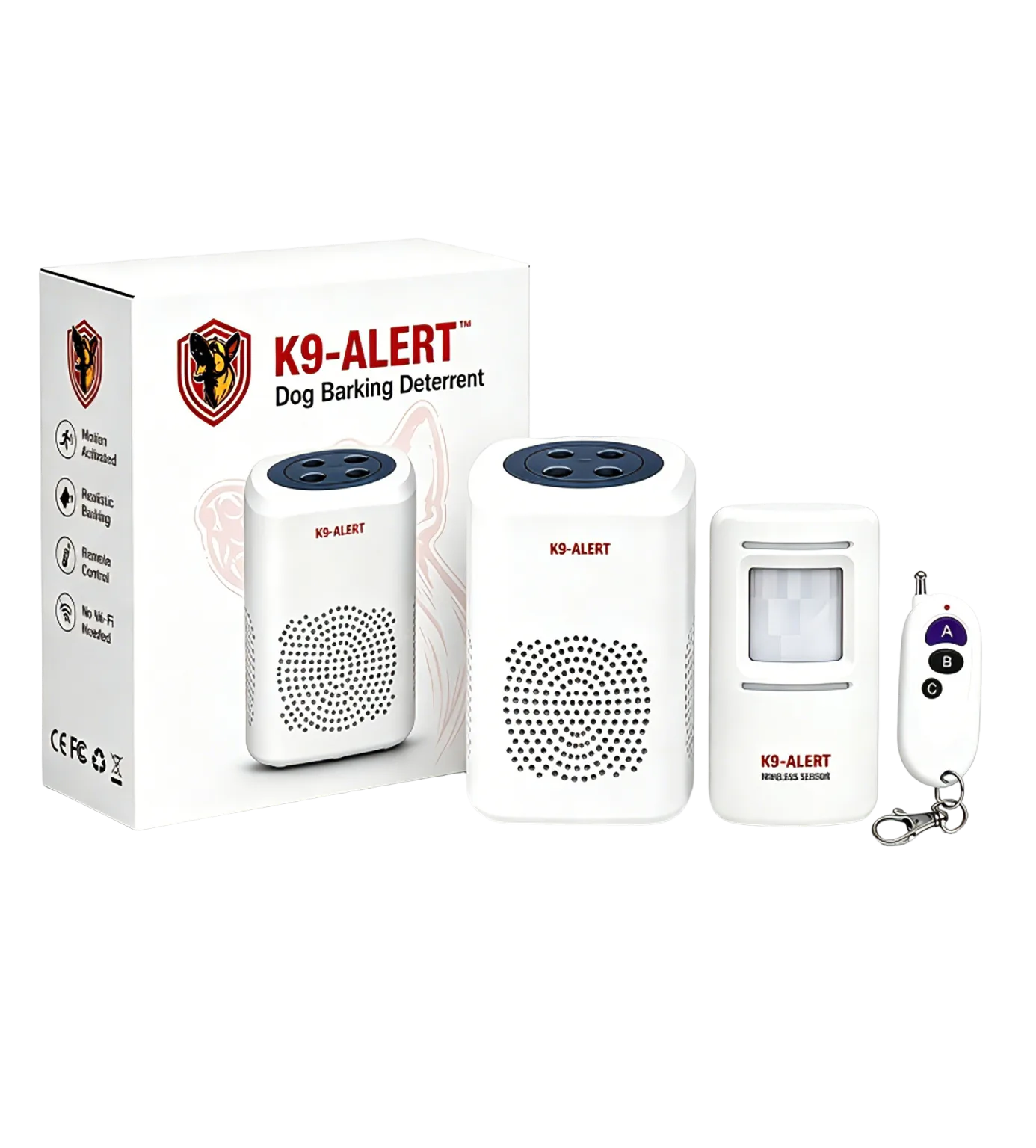
Add a barking deterrent to your entry points tonight.
K9-Alert is a motion-activated barking alarm. No wiring, no Wi-Fi, no app. Place the sensor at your front door, back door, garage or side gate — the receiver triggers realistic barking the moment motion is detected.
- Set up in minutes — no tradesperson, no landlord permission needed.
- Remote arm/disarm — one button on your key ring controls it.
- $99.95 — a 30-day money-back guarantee and 1-year warranty.
Step 7: Give yourself and your household time to feel safe again
A break-in is a violation. Feeling unsettled, anxious or on edge in your own home afterwards is a normal and understandable response. The practical steps above are important, but do not neglect the emotional dimension.
- Talk about how you feel with people you trust.
- If anxiety about being home alone is persistent, it may help to speak to a GP or counsellor.
- Beyond Blue: 1300 22 4636
- Lifeline: 13 11 14
Knowing you have taken practical steps — fixed the entry, added deterrents, told neighbours — provides genuine reassurance. The goal is not just security, but the feeling of security.
Reduce the repeat risk — add a deterrent layer tonight.
K9-Alert is a motion-activated barking alarm for Australian homes. No wiring, no subscription. $99.95 with free AU shipping and a 30-day money-back guarantee.
Order K9-AlertFrequently Asked Questions
Should I go inside after discovering a break-in?
No. Do not enter until police have attended. Call 000 if you believe someone is still inside, or 131 444 (non-emergency) and wait outside.
What do I need for my insurance claim after a break-in?
A police event number, photographs of damage, a list of stolen or damaged items, and receipts for emergency repairs. Contact your insurer as soon as possible after obtaining the police event number.
How do I secure my home after a break-in if I'm a renter?
Contact your landlord or property manager immediately — they are responsible for repairs to locks and entry points. While waiting, a portable motion-activated barking alarm provides an immediate deterrent with no installation required.
See the barking dog alarm in action
Product claims are easier to judge when you can hear the device. This short demo shows the K9-Alert barking dog alarm detecting movement and playing realistic barking, so you can assess the sound before deciding where it fits in your home, garage, shed or rental.