
TL;DR: Yes, burglars can come back after a break-in. ABS 2024-25 data shows 196,600 Australian households experienced a break-in, and about 24% of those victim households had more than one incident. Tonight, protect people first, secure the damaged entry, move keys, add light and use a local deterrent before the approach stays quiet.
Author: Daniel Tang · Published: · Updated: · Reviewed sources: ABS, ACT Policing, Victoria Police, ANU and Journal of Criminology research.
This guide is prevention education for Australian households. It is not emergency, legal or insurance advice.
What should you do if you think someone is inside?
If you hear an intruder or believe someone is still in the home, treat it as a Triple Zero (000) safety situation, not a property problem. ACT Policing advises leaving safely if you can, going to a safe place, calling police and waiting outside.
If leaving would put you closer to the person, keep distance, stay quiet, get behind a lockable door if possible and call emergency services. Your goal is to keep yourself and your family away from confrontation and able to give police useful information.
Do burglars come back after a break-in?
Yes, repeat burglary can happen, and the concern is evidence-based. ABS 2024-25 data says 76% of break-in victim households had one incident, which means about 24% had more than one break-in incident during the year.
Being burgled is a violation, not just a loss. Long after stolen items are replaced, people often lie awake, flinch at noises outside and feel unsafe at home. If that is where you are right now, the fear that someone could come back is understandable.
| ABS 2024-25 measure | Reported figure | What it means after a break-in |
|---|---|---|
| Households that experienced a break-in | 196,600 households | The risk is common enough that practical first-week prevention matters. |
| Break-in victim households with one incident | 76% | About 24% had more than one incident, so repeat risk should be managed early. |
| Households that experienced attempted break-in | 217,500 households | Approach deterrents matter because many incidents happen before entry succeeds. |
| Attempted break-ins with property damaged | 44% | A failed attempt can still damage doors, windows, gates or garages. |
| Break-ins where an offender confronted someone | 12% | Personal safety and emergency planning must come before protecting possessions. |
When is repeat burglary risk highest?
The risk window is highest before the property looks changed. Victorian recorded-crime research found repeat burglary victimisation occurs swiftly and then decays over time, so the first night, first weekend and first few weeks should be treated as action periods.
An offender may already know the entry point, where keys were kept, whether the house was quiet during the day, where tools or bikes were stored, and which door or window gave them cover. A second attempt is often less uncertain unless something visible or audible has changed.
Why do burglars come back to the same house?
Burglars may return because the property now feels familiar. The ABS repeat-incident signal and Victorian repeat-victimisation research both point to the same practical lesson: reduce certainty by changing the route, routine and signals around the home.
- The route in: the side gate, garage door, window or weak lock that worked the first time.
- The key location: car keys, wallets and handbags often sit near entries because that is convenient for the household.
- The quiet times: school drop-off, work hours, dog-walking routines and weekend sport can create predictable empty-home windows.
- The replacement cycle: stolen electronics, tools or bikes may be replaced through insurance, making the home attractive again.
- The lack of visible change: if the door, gate, lighting and sounds are the same, the risk calculation may feel the same.
What should you do on the first night after a break-in?
The first night is about people, evidence and fast deterrence. ABS data shows 12% of break-ins involved an offender confronting someone, so your first layer is safety, then emergency repair, moved keys, lighting and a sound cue before the damaged entry is tested again.
- Secure the damaged entry. If a door, lock, window or garage entry was used, arrange urgent repair. If a permanent repair cannot happen tonight, use a temporary barrier and avoid sleeping near the damaged entry.
- Move keys and wallets away from doors. Put car keys, garage remotes, wallets and handbags in an interior room, not on a hook, bench or bowl near the entry.
- Photograph damage and keep the scene clear. Take photos for insurance, but do not clean or move evidence until police or your insurer tells you it is okay.
- Add light at the approach. Use motion lighting or a temporary plug-in light so the front path, side gate, carport or shed path does not stay dark and hidden.
- Add sound before entry. A barking-dog cue or local alarm is useful because it changes the moment before someone touches the door. If you need a same-night layer without wiring, K9-Alert is designed for this exact gap.
- Tell one trusted neighbour. Ask them to watch for repeat approaches, unfamiliar cars, fence movement, gate noise or people checking doors.
| Situation | Do first | Add next | Where K9-Alert fits |
|---|---|---|---|
| Front door forced | Repair or brace the door, then move keys away from the entry. | Add motion lighting and check whether the door can be seen from the street. | Place the sensor on the front approach so barking starts before the door is touched. |
| Keys or garage remote stolen | Re-key locks, disable remotes and move spare keys to an interior room. | Update household routines so keys are not visible from windows or doors. | Use the receiver inside and sensor near the path most likely used to return. |
| Side gate used | Lock the gate, remove climbing aids and trim cover around the side path. | Put light on the side route and ask a neighbour to watch that boundary. | Place the sensor where someone crosses into the side path, not only at the door. |
| Garage or shed targeted | Move tools, bikes and remotes out of sight, then secure the roller door or shed latch. | Add a driveway or shed-path light and mark tools for identification. | Use K9-Alert as an audible occupancy cue for the garage or shed approach. |
How do you protect each entry point?
Think in zones, not gadgets. ABS recorded 217,500 Australian households experiencing attempted break-ins in 2024-25, so prevention should start before a door or window is opened: visibility, sound, locks and changed routines around each approach.
Make approach noisy
Use a motion-triggered barking deterrent, sensor light or visible doorbell camera so a person gets a response before reaching the door. This is the strongest first placement for K9-Alert after a front-entry incident.
Remove hidden access
Lock the gate, trim cover, move bins or ladders away from fence lines, and place a sensor where someone enters the side path. Do not wait until the person reaches the back door.
Treat it like a door
Move remotes and keys away from the garage entry, keep tools out of view and add a deterrent near the driveway or roller-door approach.
Stop the quiet test
Check locks, screen doors and window latches. A silent rear entry is attractive because neighbours are less likely to see it.
What should you do during the first week?
The first week is where emergency fixes become routine. Victorian repeat-burglary research found repeat victimisation occurs quickly before declining, so use the week to make the property visibly and audibly different from the home that was first targeted.
- Re-key or replace compromised locks. Do this quickly if keys, garage remotes or bags were stolen.
- Change where valuables live. Do not put replacement electronics, tools or keys back in the same visible locations.
- Walk the approach at night. Stand where a stranger would stand: front path, side gate, carport, back fence and shed path. Look for darkness, cover and quiet.
- Build a family plan. Decide where children go, which door is safest, who calls 000 and which neighbour can help if something happens.
- Report suspicious return visits. People checking doors, photographing the house, testing gates or circling slowly are worth reporting through the correct local police channel.
- Keep one no-subscription layer armed. For many homes that is a motion light, a local barking deterrent, or both, especially near the entry point used the first time.
Where does K9-Alert fit in the plan?
K9-Alert fits as an approach deterrent, not as a police, lock or insurance replacement. Victoria Police advises making a home look occupied; K9-Alert adds an audible occupancy cue in the seconds before an opportunistic person decides whether the home is empty and easy.
Place the wireless sensor at the approach that matters most: front door, side gate, garage, shed, back door or driveway edge. When motion is detected, the receiver plays realistic barking inside the property. That gives an empty home an immediate occupancy cue without Wi-Fi, an app, a subscription or an electrician.
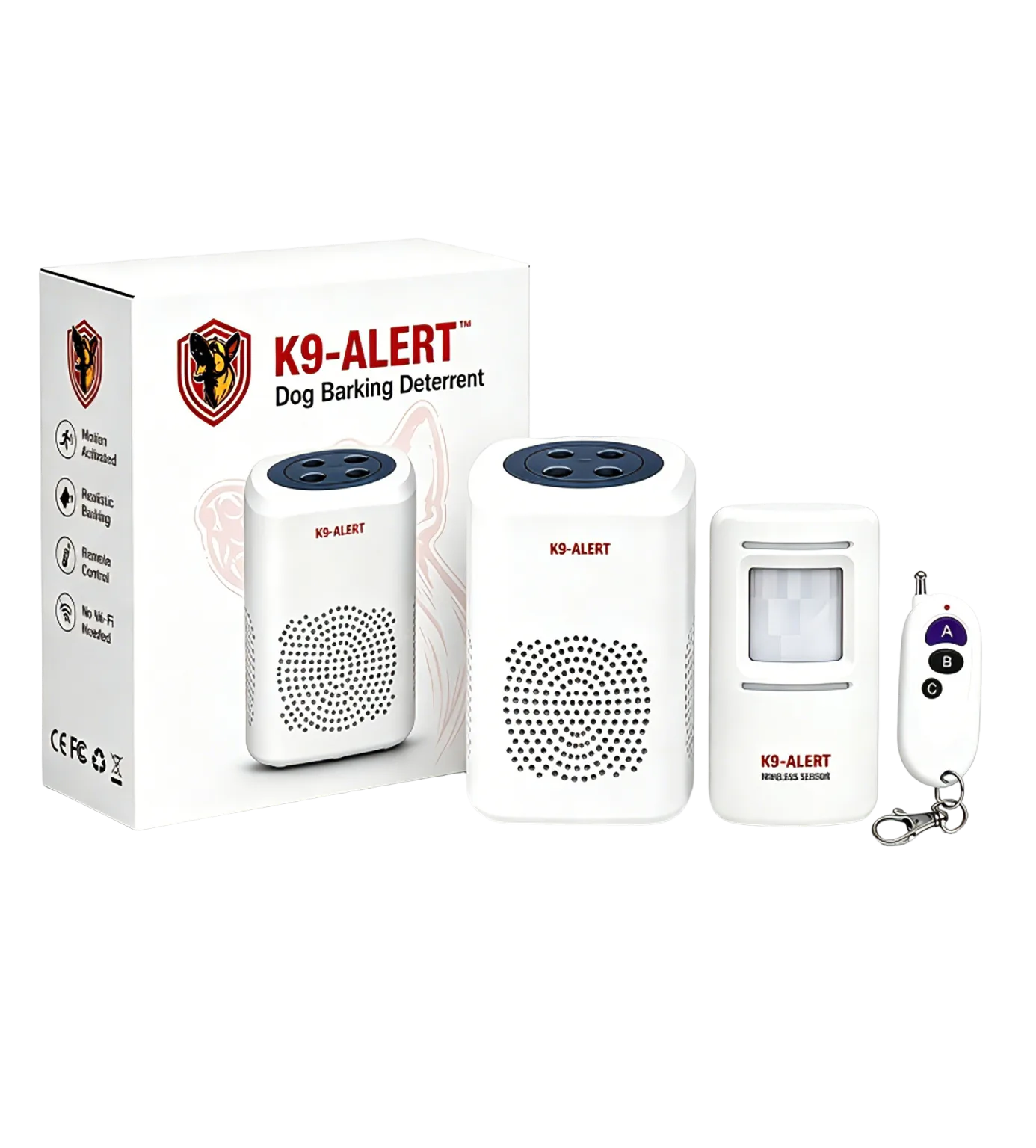
Make the property sound occupied before entry.
K9-Alert works without Wi-Fi, an app or a subscription. Set the wireless sensor near the approach and use the remote to arm or disarm the barking deterrent as part of your first-week security reset.
- No installation required - plug in and place within minutes.
- Portable placement - front door, garage, shed, rental or side gate.
- Clear commercial fit - A$99.95 with free AU shipping, a 30-day money-back guarantee and a 1-year warranty.
What should you not rely on by itself?
No single device solves repeat burglary risk. ABS data shows both completed break-ins and attempted break-ins affect Australian households, so the stronger plan combines physical repair, routine changes, visibility and one immediate response before the entry point is tested.
- Cameras only: cameras help identify what happened, but many people do not see phone alerts in time.
- Lights only: lights reduce cover, but they do not always make the home sound occupied.
- Locks only: locks matter, but they work best with light, sound and changed routines.
- Neighbour awareness only: neighbours help, but they cannot watch every approach at every hour.
If you need the wider sequence, read the 7-step after break-in checklist first. If Wi-Fi, apps or subscriptions are the blocker, compare the no-Wi-Fi home security options before you buy.
What are the common questions after a break-in?
How likely is it that burglars come back?
The risk is higher after a first break-in than for a household with no recent incident. ABS 2024-25 data shows 76% of break-in victim households had one incident, meaning about 24% experienced more than one break-in incident during the year.
How soon do repeat break-ins usually happen?
Recorded-crime research using Victorian burglary data found repeat victimisation occurs swiftly and then decays over time. Treat the first night, first weekend and first few weeks as the period when the home needs to look visibly changed.
What should I do if I think someone is inside?
Do not confront the person. If you can leave safely, get out, go to a safe place and call Triple Zero (000). If leaving would put you in danger, stay quiet, keep distance, call emergency services and follow police instructions.
Do barking dog alarms actually deter burglars?
They work best as an occupancy cue before entry. Victoria Police advises making a home look occupied and even leaving out a dog bowl or lead. A motion-triggered barking deterrent applies that signal when someone approaches an entry point.
What can I add tonight without an electrician?
Start with a no-Wi-Fi barking deterrent, motion-sensor lighting, moved key storage and a reinforced lock or temporary repair at the entry point that was used. These are quick layers while you arrange permanent repairs.
Should I buy cameras, an alarm or a barking deterrent first?
Start with the layer that changes the approach fastest. Cameras help record, alarms help after contact, and a barking deterrent helps before entry by making the home sound occupied. Most homes benefit from combining two or more layers.
Where should I place a barking deterrent after a break-in?
Place the sensor where a person must pass before reaching the vulnerable entry: front path, side gate, garage approach, back door, shed path or driveway edge. The goal is to make the property respond before the door or window is tested.
What sources does this guide use?
- Australian Bureau of Statistics, Crime Victimisation 2024-25
- Sagovsky and Johnson, When Does Repeat Burglary Victimisation Occur?, Journal of Criminology
- ANU, An evaluation of an Australia-based home burglary prevention program
- ACT Policing, Home Security
- Victoria Police, Prevent home burglaries
See the barking dog alarm in action
Product claims are easier to judge when you can hear the device. This short demo shows the K9-Alert barking dog alarm detecting movement and playing realistic barking, so you can assess the sound before deciding where it fits in your home, garage, shed or rental.