
TL;DR: To stop porch package theft, act before the parcel is on the step: redirect deliveries to a parcel locker or safe drop point, hide the box from street view, add a motion-triggered deterrent at the approach, and keep the camera as evidence — not as your only defence.
The footage is almost boring to watch. A man in a grey hoodie walks up the path, doesn't even glance at the camera, picks up the box, and is gone. Nine seconds, start to finish. The homeowner — the version of this that plays out in thousands of Australian driveways every week — did everything the internet told her to. She bought the doorbell camera. She got the phone alert. She watched it happen live from her desk, eleven kilometres away, completely unable to do a single thing about it.
That's the quiet problem with how most of us think about parcel theft. We buy a witness when what we needed was a deterrent. And the numbers say a lot of us are learning this the hard way: an estimated $468 million worth of parcels are stolen from Australian homes in a single year, with roughly one in seven of us hit by a so-called "porch pirate". This guide is about the nine seconds before the hoodie reaches your box — because that's the only window where this crime can actually be stopped.
Why porch piracy is almost impossible to punish
Here's the part that should change how you think about it. Package theft is, by the numbers, a nearly consequence-free crime for the person doing it. Analysis of porch piracy puts the arrest rate at around 10% of cases — meaning roughly nine in ten go unsolved. And it's heavily under-reported, because retailers frequently just refund or replace the item, so the theft never even reaches police.
Sit with that for a second: high reward, near-zero risk, almost no effort. That's not the profile of a criminal mastermind. It's the profile of opportunism. The porch pirate is usually someone walking or driving past who spots a box in plain sight and grabs it in the few seconds it takes to walk up your path. Some of them simply follow delivery vans down a street, collecting boxes behind them like a second, darker courier.
The decision to take your parcel is made out in the open, on your doorstep, often in broad daylight. Which is exactly why the usual advice keeps failing:
- A doorbell camera records a hooded figure you'll almost certainly never identify.
- "Ask the courier to hide it" only works if there's somewhere to hide it.
- "Be home to receive it" isn't realistic for the working households whose empty homes are the entire reason parcels get left unattended.
The camera trap: a witness is not a guard
Let's be fair to cameras, because they do have a place. A visible camera is a mild deterrent on its own. Footage can occasionally support a police report, an insurance claim, or a retailer refund. And a live alert tells you something's happening. If you already own one, keep it.
But for this specific crime, you need to be honest about three hard limits:
- It's a record, not a barrier. By the time the lens captures the theft, your parcel is already walking down the street. Identification rates are low; recovery rates are lower still.
- It outsources the response to you. A live alert is only worth something if you see it and can act — and from a desk across town, mid-meeting, you can't.
- It depends on Wi-Fi and power. Routers drop. Batteries die. The one afternoon it's offline is the afternoon it matters.
A camera answers "what happened?" Porch piracy demands you answer a completely different question: "how do I make them choose the next house instead of mine?" That's not a recording problem. It's an approach-stage problem — and it's very solvable.
The 4-layer plan that actually deters a porch pirate
The entire goal is to change what the offender sees and hears in the few seconds before they commit — to make your doorstep read as occupied, alert, and not worth the risk. Here it is, cheapest and highest-impact first.
Layer 1 — Remove the parcel from the equation (free)
The single most effective move is making sure there's nothing sitting out to grab. This is also exactly what Australia Post and Victoria Police recommend:
- Send anything valuable to a free Australia Post parcel locker, PO Box, or Parcel Collect point instead of your front door.
- Set delivery instructions telling couriers to leave parcels out of street view — behind a gate, down the side of the house, anywhere not visible from the footpath.
- Where you can, schedule deliveries for when someone's home.
- Switch bank and ID-related mail to email, not post. Stolen mail is a well-documented gateway to identity theft — and if you ever suspect your identity's been compromised, Victoria Police directs people to IDCARE on 1800 595 160.
Do only this and you've already removed the opportunity behind most casual thefts.
Layer 2 — Make the doorstep sound occupied (this is the K9-Alert layer)
A porch pirate is betting on a quiet, empty house — nobody to see them, nothing to react. The fastest way to break that bet is sound, at the exact moment they approach.
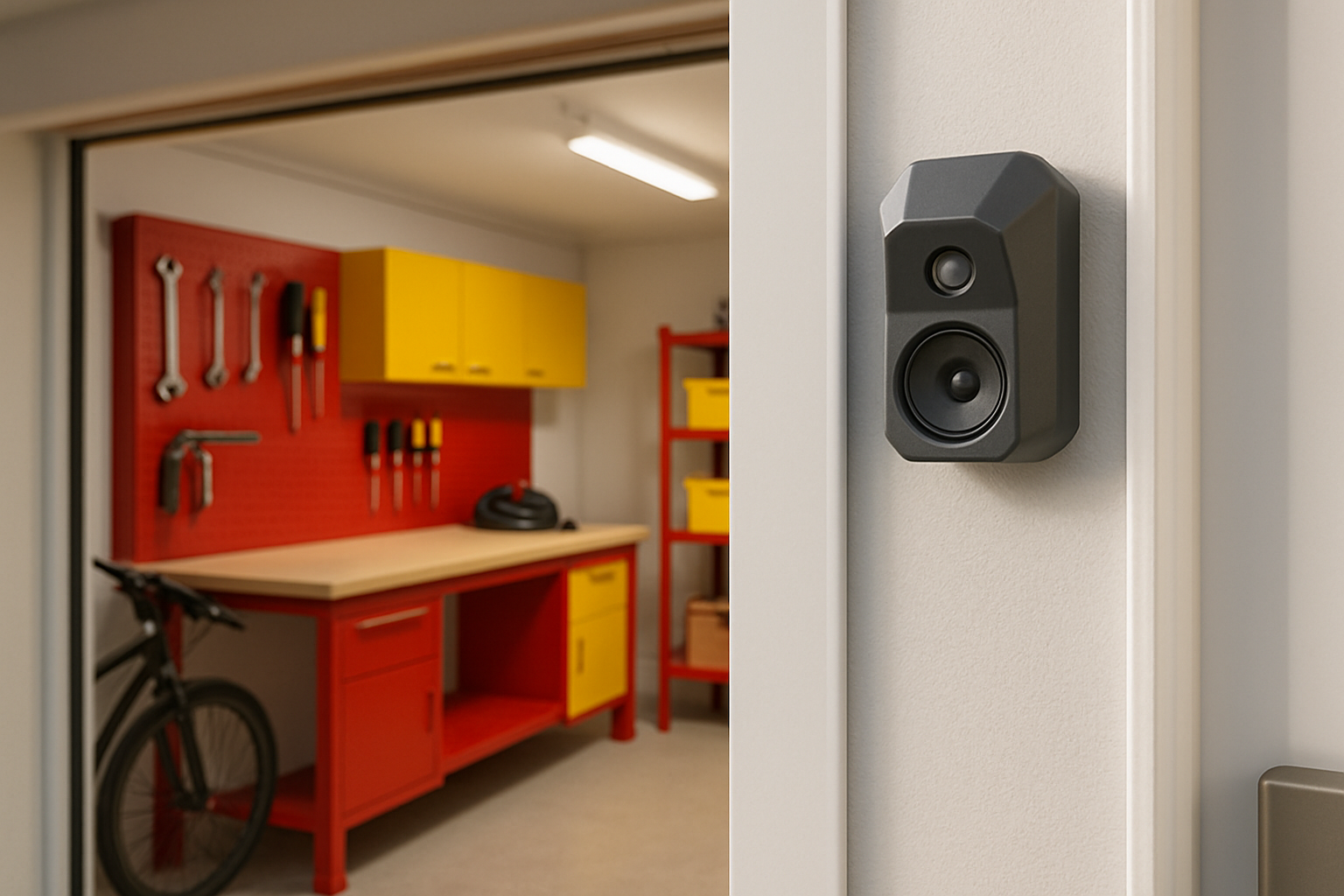
This is precisely what a K9-Alert motion-activated barking alarm is built to do. The instant it senses someone at your door, it plays realistic, convincing barking — the universal signal of an occupied, guarded home — before the thief has reached your parcel. Unlike a camera, it doesn't wait for you to notice and respond from across town. It reacts on its own, on the doorstep, in the only nine seconds that count. No Wi-Fi, no app, no subscription, no wiring — it just works, even when your internet doesn't.
We're not pretending it's magic: a barking alarm won't recover a parcel that's already gone, and it isn't a replacement for redirecting genuinely valuable deliveries. What it does is attack the crime at its decision point. For the honest, unspun version of where these alarms work well and where they don't, read our straight-talking guide: do barking dog alarms actually work? And for exactly where to position one at an entry, see our barking dog alarm placement guide.
Layer 3 — Light the approach ($20–$40 each)
A shadowed entry lets a thief feel invisible. Solar motion-sensor lights need no wiring and no power bill — they charge by day and snap on the second someone steps into range, adding to that "this house is watched and active" signal. Two or three cover most front entries.
Layer 4 — Add the camera on top, not instead
Now bring the camera back in — as the evidence layer sitting above your deterrents, not as your whole defence. The order is everything: deter first, record second. A camera that films a theft you already prevented is a camera that never had to film anything.
A quick reality check on mail and identity theft
Porch piracy isn't only about losing what's in the box. Stolen mail — replacement cards, bank statements, anything with your personal details — is a recognised stepping-stone to identity theft and fraud, which is why mail theft is treated as a serious offence in Australia. The good news: the same approach-stage deterrence that protects parcels also protects your letterbox. (And again — if you think stolen mail has exposed your identity, IDCARE on 1800 595 160 is the national support service Victoria Police points people to.)
Your doorstep, sorted this week — a simple checklist
If you do nothing else, do these, in this order:
- This afternoon: set delivery instructions on your most-used retailer and Australia Post accounts to "leave out of street view" or redirect to a parcel locker.
- This week: put a K9-Alert barking alarm at your front entry so the doorstep responds the moment someone approaches — no Wi-Fi or subscription to set up.
- This month: add a solar motion light to any dark approach, and switch sensitive mail to email.
- Optional: mount a visible camera as your evidence layer, on top of the above.
That's a complete porch-piracy defence for well under the price of a single year's camera subscription — and most of it is one-time spend.
FAQ
How common is parcel theft in Australia?
Very. An estimated $468 million worth of parcels are stolen from Australian homes in a single year, with around one in seven people affected. It's also under-reported, because retailers often quietly refund stolen items, so the real figure is likely higher.
Will a doorbell camera stop my parcels being stolen?
Not reliably. A camera records the theft and is a mild visible deterrent, but it can't physically stop someone already at your door, identification rates are low, and it depends on Wi-Fi, power and you reacting in real time. Treat it as an evidence layer on top of real deterrence, not as your only measure.
What's the single most effective way to prevent porch piracy?
Remove the opportunity. Redirect valuable deliveries to a free Australia Post parcel locker, PO Box or Parcel Collect point, and set delivery instructions to keep parcels out of street view. If there's nothing visible to grab, most opportunistic thefts simply don't happen, then add approach-stage deterrence like lighting and an audible alarm.
Can a barking dog alarm deter package thieves?
Yes, as an approach-stage deterrent. A motion-triggered barking alarm makes your doorstep sound occupied and guarded the instant someone approaches, breaking the quiet empty house assumption a porch pirate relies on. It won't recover an already-stolen parcel, but it targets the exact moment the thief decides whether to step up to your door.
Is stealing mail or parcels a serious crime in Australia?
Yes. Mail theft is a Commonwealth offence carrying significant penalties, largely because it's so often a precursor to identity theft and fraud. If you believe stolen mail has compromised your identity, contact IDCARE on 1800 595 160.
I'm renting — can I use any of this without modifying the property?
Almost all of it. Delivery redirection and email switching cost nothing and change nothing. A K9-Alert alarm and solar lights need no drilling, wiring or landlord approval, and both move with you when you go.
The bottom line: porch piracy is common, lucrative, and almost never punished — which is exactly why the win has to come before the theft, not after. Remove the unattended parcel, then make your doorstep look and sound occupied at the approach. Do that, and you've beaten the crime at the only point it can be beaten.
Ready to cover the doorstep itself? A K9-Alert barking alarm is the one-time, no-subscription layer that responds the second someone steps up — and it moves with you between the front door, garage, and shed. For the full home plan it fits into, see our under-$200 home security guide.
About this guide: K9-Alert is an Australian home-security brand (RED SHIELD PTY LTD) specialising in motion-activated barking deterrents. This guide draws on Victoria Police and Australia Post delivery-security guidance and publicly reported Australian parcel-theft data. It's general information, not legal or insurance advice — for identity-theft concerns, contact IDCARE on 1800 595 160.
See the barking dog alarm in action
Product claims are easier to judge when you can hear the device. This short demo shows the K9-Alert barking dog alarm detecting movement and playing realistic barking, so you can assess the sound before deciding where it fits in your home, garage, shed or rental.