
TL;DR: The highest-risk period for Australian homes is late December through January. The most effective precautions are occupancy simulation (light timers, occupied cues), physical hardening (locks, no valuables visible), and a trusted neighbour check. A motion-activated deterrent like a barking dog alarm adds a response layer even when no one is home.
Why Christmas is peak break-in season in Australia
The Australian Bureau of Statistics Crime Victimisation survey consistently identifies summer as the peak season for residential break-ins, with December and January seeing elevated rates in most states. The reasons are structural:
- Homes are empty for longer: extended breaks of one, two, or even three weeks are common. An empty home for two weeks is a fundamentally different risk from an empty home for eight hours.
- Neighbours are also away: when whole streets empty out, the natural surveillance that deters casual intrusion disappears.
- New items are inside: Christmas presents — electronics, jewellery, cash — are visibly new and valuable. A half-visible gift box through a window is an inventory advertisement.
- Mail and parcels pile up: an uncollected pile of mail is one of the clearest signals that no one has been home in days.
The before-you-leave checklist
Physical hardening
- Deadbolt every door — including the internal door from garage to house, which is frequently forgotten.
- Lock every window — especially ground-floor and low-accessible windows. Louvre windows need a pin lock; standard latches are not enough.
- Secure the garage door — a padlock through the track prevents the door being opened even if the automatic mechanism is bypassed.
- Store bikes, barbecues and outdoor furniture inside or locked — loose outdoor gear is taken first.
- Move valuables away from windows — don't leave items visible from the street or a side fence.
Occupancy simulation
An empty-looking home is the primary target selection signal. These measures directly address it:
- Light timers — plug-in smart or mechanical timers on lamps set to realistic patterns (e.g., living room from 7 pm, bedroom lamp from 9 pm) make the house look lived in from outside.
- Dog bowl or lead — Victoria Police explicitly recommends leaving out a dog bowl or lead even without a dog, as the occupancy cue deters approach.
- Motion-triggered barking alarm — a bark alarm responds to any movement approach even while you're away. Unlike a light timer, it actively reacts to a specific threat rather than running on a schedule.
- Car in the driveway — if a trusted friend or family member is willing to park their car in your driveway occasionally, it breaks the unbroken "no car for two weeks" signal.
Admin and logistics
- Pause mail and parcel delivery — Australia Post offers a hold-mail service. Use it. A full letterbox says "no one home for 10+ days" more clearly than any other signal.
- Ask a trusted neighbour to check in — collect any stray items, check nothing looks wrong, and vary the pattern so any observer cannot predict a check schedule.
- Don't announce your holiday on social media — post the holiday photos after you return, not before or during. A public "Merry Christmas from Bali!" with a departure timestamp is an invitation.
- Review insurance — check your home and contents policy covers break-ins while unoccupied and whether extended absence (e.g., more than 30 days) has different conditions.
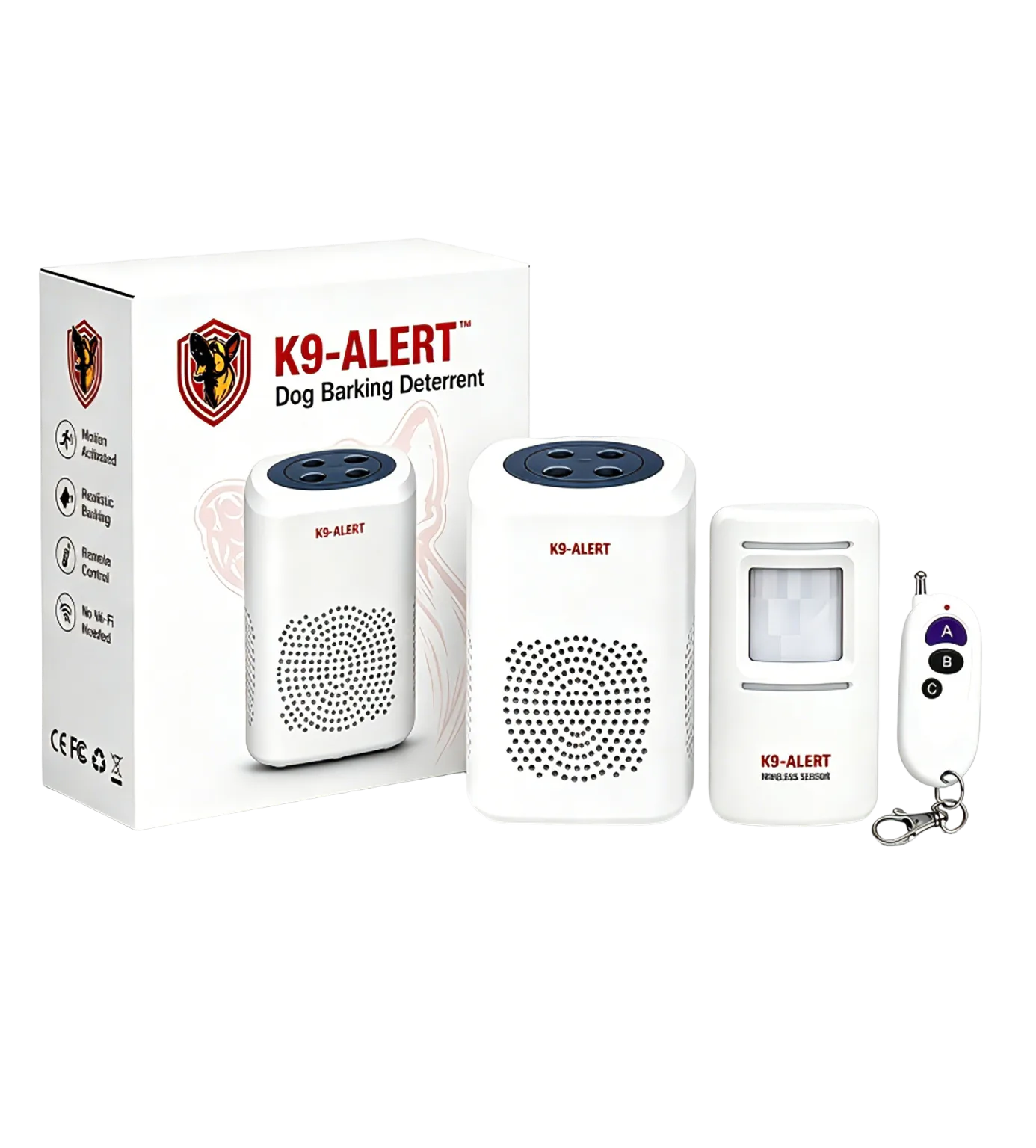
The bark alarm that responds even when you're not home
K9-Alert's motion-triggered bark alarm activates automatically in response to movement. Unlike a light timer, it reacts to the specific moment someone approaches your door — day or night, whether you're home or halfway across the country.
- No Wi-Fi required: works on batteries, no internet connection needed.
- Arm before you leave: key fob remote, one button.
- Covers any entry point: front door, garage, side gate, back door — position the sensor where you need it.
The most common mistakes that make a holiday break-in easy
Letterbox overflow
Two weeks of mail and parcels piled up at the door is a public announcement that no one has been home. Pause deliveries before you leave.
Social media departure post
Even a private Facebook post can reach the wrong person. Post holiday photos after you return, not before.
No light variation at night
A house that is completely dark every evening for two weeks stands out in a street where most homes have activity. Timer switches on one or two lamps costs less than A$20.
Forgotten garage or back door
Checking the front door is automatic. The back door, side gate, and internal garage door are frequently overlooked. Thieves know this.
Is a monitored alarm worth it?
Professional monitoring provides a response call and police notification when triggered. The trade-off:
| Approach | Annual cost | Response time | Deterrence |
|---|---|---|---|
| DIY deterrent layers (K9-Alert + locks + light timers) | A$120–150 once | Immediate deterrent at approach | Prevents attempt before entry |
| Professional monitored alarm | A$360–600/year | 10–15 min police response | Response after alarm triggers |
| Unmonitored siren alarm | A$80–200 once | Alert only — no response | Noise after entry |
For most households, the combination of physical hardening, occupancy simulation, and a deterrent alarm provides strong protection at a fraction of the ongoing monitored alarm cost. Monitored alarms make most sense when you have very high-value contents and reliable mobile coverage for response.
Leave for Christmas knowing your home is protected.
K9-Alert is a motion-triggered barking dog alarm — arms before you leave, responds to any approach while you're away. A$99.95 with free AU shipping and 30-day money-back guarantee.
Order K9-Alert · $99.95Frequently Asked Questions
Is home burglary more common over Christmas in Australia?
Yes. Australian Bureau of Statistics crime data consistently shows residential break-ins peak during summer holiday periods, particularly late December through January. Homes are empty for extended periods, neighbours are also away, and the social activity of the season (Christmas gifts, electronics, new purchases visible through windows) increases the reward for a thief.
What is the best way to make your house look occupied while on holiday?
The most effective tactics are: pause mail and parcel deliveries so they don't pile up, use timer switches on lamps to create realistic light patterns at night, ask a trusted neighbour or friend to visit periodically, leave a dog bowl or lead visible if you don't have a pet, and use a motion-activated barking dog alarm that responds to approach even when no one is home.
Should I tell people I'm going away for Christmas?
Tell only people you genuinely trust, and do so privately. Avoid posting holiday departure announcements or photos on social media until after you return. A public post announcing you are away for two weeks is effectively an advertisement that your home is unoccupied.
Is a monitored alarm worth it for holiday security?
Professional monitoring provides a response call and police notification when triggered, but comes with ongoing subscription costs (typically A$360–600/year) and a 10–15 minute police response time in most Australian cities. For many homeowners, a layered approach — good locks, deterrent alarms, occupancy simulation, and a trusted neighbour check — provides strong protection at far lower cost.
See the barking dog alarm in action
Product claims are easier to judge when you can hear the device. This short demo shows the K9-Alert barking dog alarm detecting movement and playing realistic barking, so you can assess the sound before deciding where it fits in your home, garage, shed or rental.