
TL;DR: Yes, you can buy a home security alarm on Afterpay or Zip in Australia - a $99.95 alarm splits into four interest-free payments of $24.99. It stays interest-free only if you pay on time, and since December 2024 buy now pay later is regulated as credit. Spread a device you would buy anyway, and prioritise a one-off deterrent over an ongoing monthly subscription.

Can you buy a home security alarm on Afterpay?
Yes. Many Australian security retailers now offer Afterpay or Zip at checkout, and K9-Alert is one of them. Buy now pay later splits the price into four equal, interest-free instalments paid every fortnight, so a $99.95 K9-Alert kit becomes four payments of $24.99 instead of one upfront charge.
This matters because cost is the most common reason a security upgrade gets postponed. Australian households reported 196,600 break-ins and a further 217,500 attempted break-ins in 2024-25 (ABS, Crime Victimisation 2024-25), and the gap between "I should sort that out" and actually doing it is often just the upfront number. Spreading it over eight weeks can close that gap.
The important word is "instalment", not "discount". You still pay the full price - buy now pay later simply changes the timing, not the total, as long as you keep to the schedule.
How buy now pay later actually works for a security purchase
At checkout you choose Afterpay or Zip instead of paying the card in full. The provider pays the retailer, and you repay the provider in four fortnightly instalments. Pay them all on time and you pay no interest and no fees.
Buy now pay later is now mainstream in Australia - the Reserve Bank estimates it accounts for around 2 per cent of all Australian card purchases (RBA, Developments in the Buy Now, Pay Later Market). That scale is exactly why it is now regulated more tightly, which is a good thing for buyers.
| Detail | What it means for a $99.95 alarm |
|---|---|
| Instalments | 4 equal payments of $24.99, one every fortnight |
| Interest | None, if every instalment is paid on time |
| Late payment | A capped late fee, and the missed payment can be reported |
| First payment | Usually taken at checkout, the rest over the following six weeks |
| What you own | The device is yours from day one, not on hire |
The catch is late fees and credit reporting. Moneysmart notes that any late or missed buy now pay later payments can be reported and can reduce your credit score, and that it is easy to over-commit across several services at once (Moneysmart, Buy now pay later services). Linking the account to a debit card, so you are spending your own money, keeps it from quietly turning into credit-card debt.
Is buying home security on a payment plan a good idea?
It can be, with one rule: only spread the cost of a device you would have bought anyway. Buy now pay later is a good fit for a planned $100 purchase you can comfortably clear in four payments. It is a poor fit for talking yourself into a bigger system than you need because the fortnightly number looks small.
The rules changed in your favour here. Since the Treasury Laws Amendment (Responsible Buy Now Pay Later and Other Measures) Act 2024 received royal assent on 10 December 2024, buy now pay later is regulated as credit, and from 10 June 2025 providers must hold a credit licence and follow the Credit Act on disclosure, dispute resolution and hardship assistance (ASIC, Buy now pay later credit contracts). In plain terms, there is now a proper hardship and complaints process if something goes wrong.
Moneysmart's practical advice fits a security purchase well: set a limit you can afford, use one service at a time, and budget the instalments alongside your other bills. If the fortnightly payment would strain the same budget that already feels tight, that is a signal to start with the free and cheap steps below first.
One-off alarm vs monitored subscription: the real cost
The biggest money question in home security is not how you pay the first bill - it is whether there is a second, third and hundredth bill after it. A payment plan spreads a one-off cost; a monitored alarm contract adds a fee that never stops. Those are very different commitments.
| Over two years | One-off deterrent on buy now pay later | Monitored alarm subscription |
|---|---|---|
| Upfront | Spread over 4 fortnightly payments | Install cost, sometimes waived on contract |
| Ongoing | Nothing after it is paid off | A monthly monitoring fee for as long as you stay |
| Lock-in | None - it is yours | Often a fixed-term contract |
| If you move | Take it with you | May need re-install or a new plan |
| Best role | Deter approach before entry | Response and monitoring after a trigger |
Neither is "the winner" - they do different jobs, and plenty of homes eventually run both. But if the budget only stretches to one thing right now, a one-off deterrent you own outright is usually the more forgiving first commitment. Our guide to no-subscription home security works through the buy-once versus pay-monthly decision in more detail.
What to prioritise if your security budget is tight
If money is the constraint, spend it in order of impact per dollar, not in order of what looks most high-tech. Most of the strongest steps are cheap or free, and a payment plan is best saved for the one device that genuinely needs it.
Spend in this order
- Fix what you already have - make sure every external door and window lock actually engages. This is free and blocks the easiest entries.
- Improve visibility - a sensor light on a dark approach is inexpensive and removes the cover an intruder wants.
- Add occupancy cues - timers on lights and a tidy, lived-in look cost almost nothing and reduce the "no one is home" signal.
- Add one reactive deterrent - a motion-triggered alarm at the main entry is the step most worth spreading over interest-free instalments if you cannot pay it outright.
- Consider recording or monitoring later - a camera or monitored plan is a useful addition once the cheaper layers are in place.
For a full low-cost plan with specific products and prices, our secure your home for under $200 guide sequences the same idea, and renters can start with the no-drill options in the best alarm for renters guide.
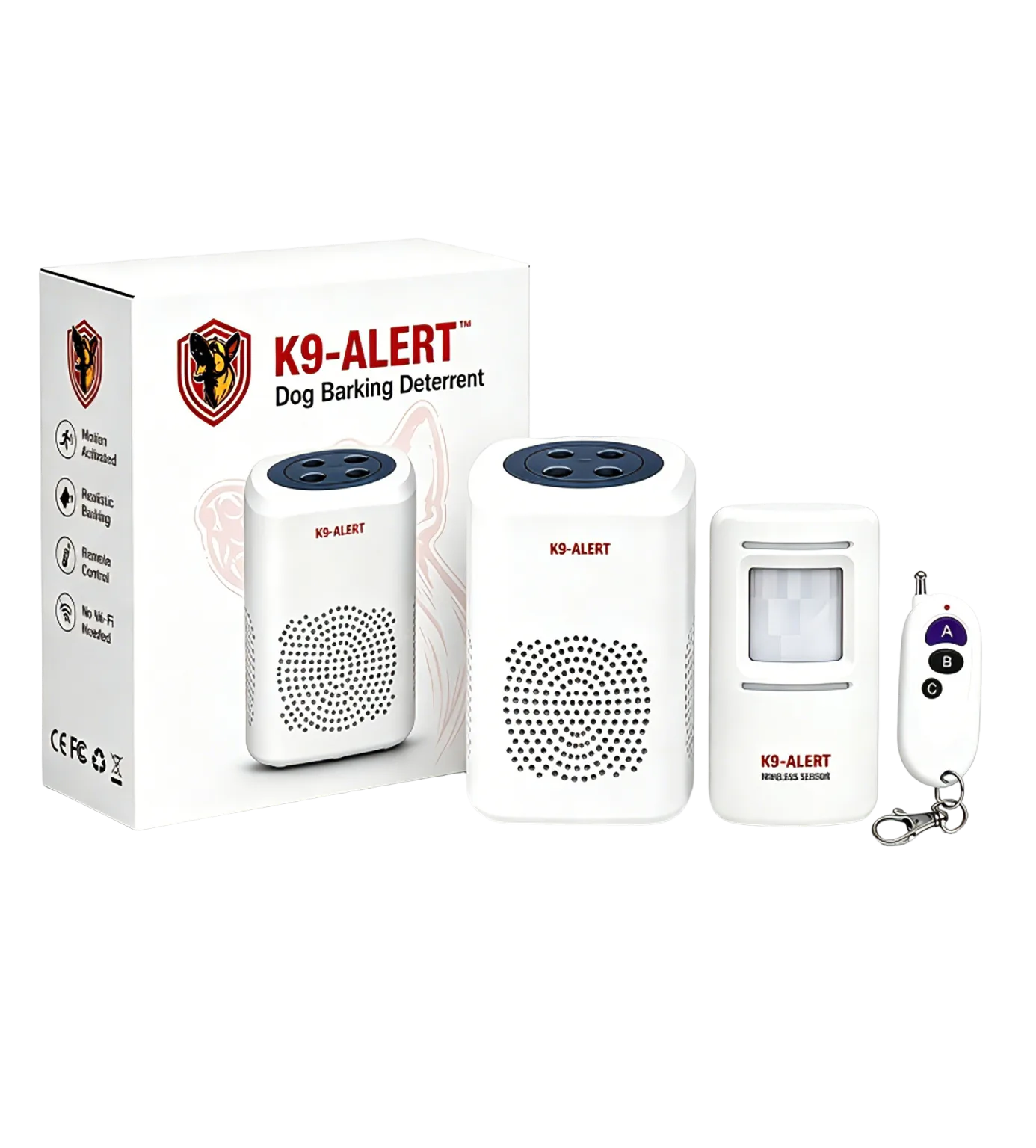
K9-Alert is the kind of one-off deterrent a payment plan suits.
K9-Alert is a motion-triggered barking dog alarm for A$99.95 - four interest-free payments of $24.99 with Afterpay, or Zip, at checkout. It is a one-off purchase with no Wi-Fi, no app and no monthly fee, so once the instalments are paid it costs nothing to keep running.
- No subscription: the cost ends when the four payments do - there is no ongoing monitoring bill.
- Motion-triggered: a wireless sensor plays realistic barking when someone approaches the entry.
- Portable: it moves with you, so financing it is not tied to one address.
Spread the cost of the first layer, not an endless bill.
K9-Alert is A$99.95 - four interest-free payments of $24.99 with Afterpay or Zip at checkout. No Wi-Fi, no app and no monthly fee once it is paid off.
Order K9-Alert · $99.95Frequently asked questions
Can you buy a home security alarm on Afterpay in Australia?
Yes. Many Australian security retailers, including K9-Alert, offer Afterpay or Zip at checkout, which splits the cost into four interest-free fortnightly payments. A $99.95 alarm works out to four payments of $24.99, with no interest as long as you pay each instalment on time.
Does buying a home alarm on buy now pay later cost more?
It is interest-free only if you pay every instalment on time. Miss one and you can be charged a late fee, and since December 2024 buy now pay later is regulated credit, so missed payments can be reported and may affect your credit score. Paid on schedule, you pay the same total as buying upfront.
Is it better to finance a monitored alarm or buy a one-off deterrent?
A monitored system spreads the hardware cost but usually adds a monthly monitoring fee that never stops. A one-off device such as a barking dog alarm is paid off in four instalments and then costs nothing to keep running, with no subscription or contract. For many households the one-off layer comes first.
What should I buy first if my home security budget is tight?
Start with the cheapest high-impact steps: working locks on every door and window, sensor lighting for dark approaches, and simple cues that make the home look occupied. Then add one motion-triggered deterrent at the main entry. Spreading that first layer over interest-free instalments can get it in place now rather than later.