
Quick answer: Most Wi-Fi cameras, smart locks and app-connected alarms stop sending alerts or recording the moment power or the NBN drops out — exactly when storms make a property look emptiest. A battery-powered, offline deterrent like K9-Alert keeps working through blackouts because it never depended on mains power or Wi-Fi in the first place.
Why blackouts are a security blind spot
Winter brings more than early sunsets. Storm fronts, fallen branches and grid faults push outage numbers up across the country every cold season, and energy distributors routinely warn customers to expect both planned and unplanned interruptions through the wetter months. For most households this means a few hours without lights or heating — annoying, but manageable.
The security gap is less obvious. A modern home increasingly relies on a single chain: mains power keeps the router alive, the router keeps the NBN modem online, and the modem is what every Wi-Fi camera, smart lock and app-based alarm needs to actually do its job. Cut the power at the start of that chain and everything downstream goes dark at once — at the same time storm-darkened streets make houses look emptier and more tempting to anyone testing doors.
What actually stops working when the power cuts
It is worth being specific, because "smart" security gear fails in different ways depending on what it depends on:
- Wi-Fi cameras. No router power means no upload to the cloud and no live view on your phone. A small internal battery might keep the lens running for a short time, but with no network path out, nothing is recorded anywhere useful.
- Smart locks. Many still unlock manually with a physical key, but app control, remote locking and access logs all disappear without power and a network connection.
- App-connected alarm panels. A siren may still sound from an internal battery, but push notifications, monitoring centre alerts and remote arming usually need an internet path that a blackout removes.
- Smart lighting and timers. Scheduled "someone's home" lighting cues stop the instant the power does — removing one of the simplest occupancy signals right when it matters most.
None of this means smart security is a bad idea. It means relying on it as your only layer leaves a predictable gap exactly when storms, scheduled outages or network faults are most likely.
Wi-Fi security vs offline battery security: what survives a blackout
Lay your current setup against a battery-only deterrent and the gap during an outage becomes obvious:
Goes blind with the router
No mains power, no upload, no alert to your phone. Footage from the outage window simply does not exist.
Local siren only, if that
Without a battery backup and a non-internet fallback, remote monitoring and notifications stop the moment the network does.
Falls back to a physical key
Useful as a backup, but remote control, access logs and app alerts are unavailable until power returns.
Never noticed the outage
No mains power, no Wi-Fi, no NBN dependency. A motion-triggered bark deterrent on batteries keeps arming and triggering exactly as before.
Building a security layer that survives a blackout
The fix is not to abandon smart devices — it is to make sure at least one deterrent in your setup has zero dependency on mains power or an internet connection. That is the gap K9-Alert is built to close. Our guide to no-Wi-Fi home security covers the broader case for keeping a layer offline; during a blackout, that layer becomes the only one still working.
A deterrent that doesn't need the grid or the NBN
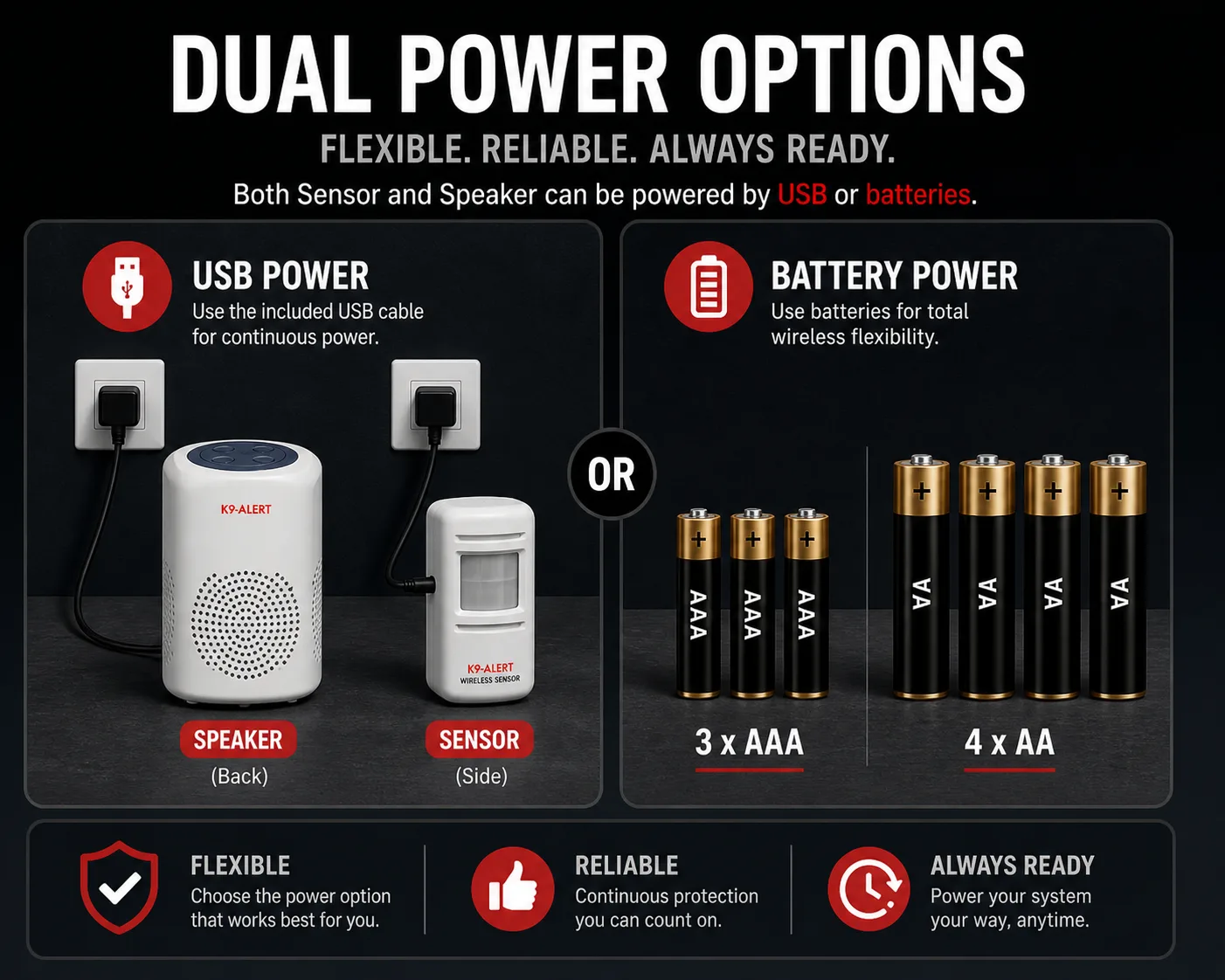
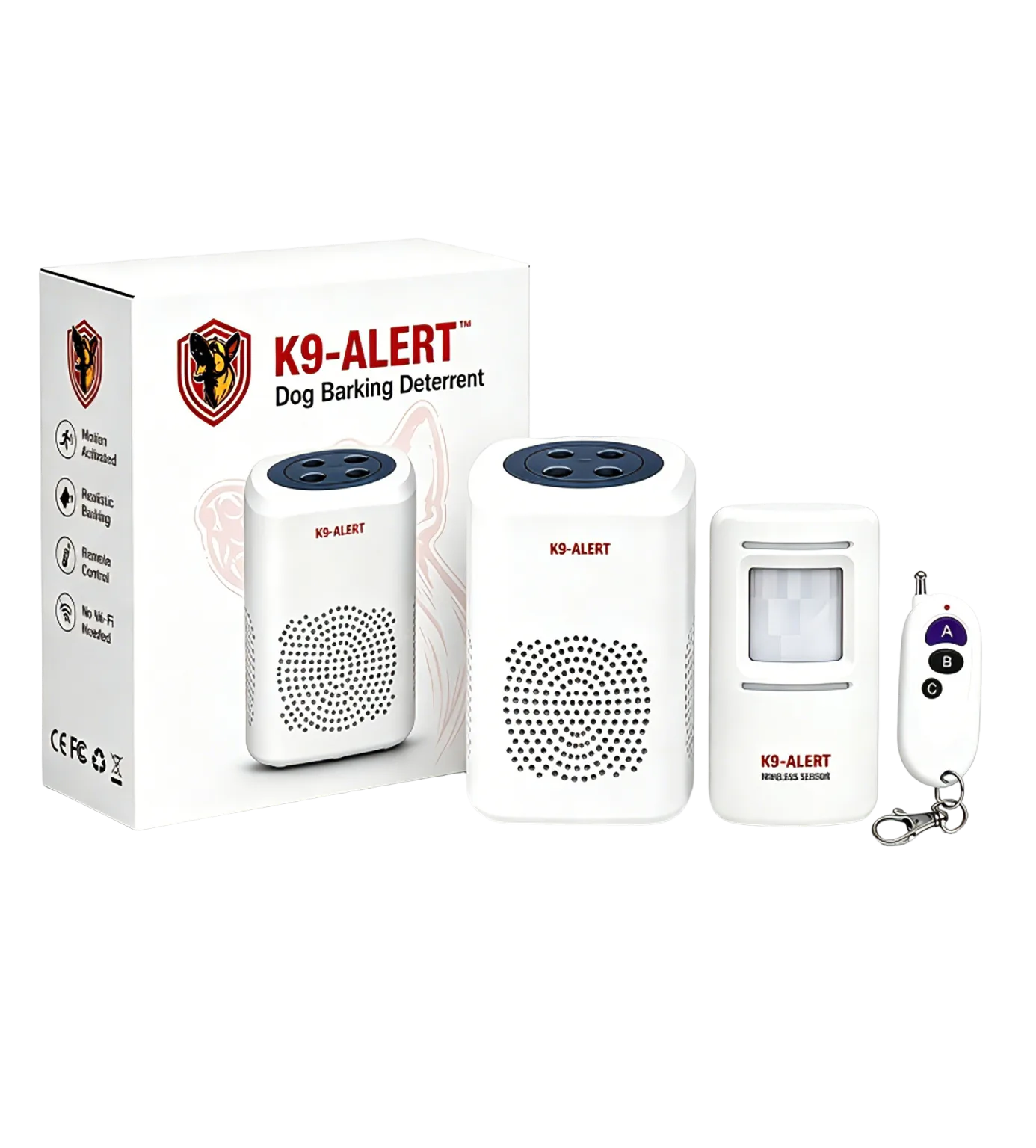
K9-Alert runs on batteries (with a mains option if you prefer), pairs a wireless motion sensor with a barking receiver, and arms or disarms with a simple remote — no router, no app and no subscription standing between motion and the alert.
- Storm-proof by design: a blackout that takes down your Wi-Fi and NBN has no effect on it.
- Set it once: no firmware updates, no re-pairing after an outage, no lost connection to troubleshoot.
- Move it anywhere: front door, garage, shed or side gate — wherever the blind spot is.
Blackout-ready security checklist
Before the next storm front rolls through, work through this list:
- Identify which of your devices need power to work. Walk through each camera, lock and alarm panel and note whether it has its own battery backup and a non-internet fallback.
- Add at least one fully offline deterrent. A battery-powered barking dog alarm at your main entry point keeps working when everything connected does not. Our winter home security checklist covers the other seasonal basics worth pairing it with.
- Keep spare batteries on hand. Store a fresh set near the device so a flat battery never coincides with a blackout.
- Test your torches and chargers before storm season, not during it. A charged power bank keeps your phone usable for calls even if the modem is offline.
- Brief everyone in the house on the manual fallback. Know where the physical key is if a smart lock loses power, and how to arm the offline alarm by remote.
- Don't rely on lighting alone as an occupancy cue. Smart timers fail with the power; a sound-based deterrent does not need light to work.
Don't let a blackout switch off your security.
K9-Alert is a motion-activated barking dog alarm that runs on batteries — no Wi-Fi, no NBN, no app and no subscription required to keep working.
Shop K9-AlertFrequently Asked Questions
What happens to my Wi-Fi security camera during a power outage?
Most Wi-Fi cameras stop recording and stop sending alerts the moment your router or modem loses power, even if the camera itself has a small battery. No internet connection means no cloud upload and no live view on your phone, so the camera is effectively blind until power and your NBN connection are both restored.
Will my smart alarm still work if the NBN goes down?
It depends on the system. Many smart alarm panels rely on a Wi-Fi or NBN connection to send push notifications and connect to a monitoring app, so an internet outage during a blackout can mean no alerts reach your phone even though the siren may still sound locally. Always check whether your specific panel has a battery backup and a non-internet fallback, such as a cellular or landline connection.
How long does a battery-powered barking dog alarm last without power?
A device like K9-Alert runs on standard batteries and is not connected to your home's mains power or Wi-Fi at all, so a blackout has no effect on it. Battery life depends on how often motion is detected, but typical household use sees batteries last for months between changes.
Should I have backup security that doesn't rely on Wi-Fi?
Yes, particularly if your main system is a Wi-Fi camera or app-based alarm. A simple battery-powered deterrent that does not depend on mains power, Wi-Fi or the NBN gives you a layer that keeps working exactly when storms, scheduled outages or network faults take everything else offline.