
TL;DR: Renters can achieve strong apartment security with zero drilling and no strata approval by combining portable door locks, door security bars, a wireless motion-triggered alarm, and window security film or pins. The renter's core constraint — no permanent modifications — rules out hardwired alarms, but it doesn't rule out effective protection.
The renter security constraint
Most home security guides assume you own the property. As a renter in Australia, you have specific restrictions:
- You cannot drill holes in walls, doors, or ceilings without landlord written permission.
- You cannot install hardwired alarms, smart doorbells with hard mounting, or CCTV systems with fixed brackets without approval.
- In a strata building, many modifications also require strata committee approval — which is a separate process from the landlord.
- Anything you install must be removable when you leave, or you may be charged for reinstatement.
These constraints eliminate a large portion of the traditional security industry's product range. But there is a second tier of security products specifically designed to be removable, portable, and non-destructive — and they are genuinely effective.
What renters can do — no permission needed
1. Portable door security
The front door is the highest-risk entry point. The following require no drilling:
- Door security bar (jammer bar): a steel bar that braces from the door handle to the floor, preventing the door opening inward. Extremely effective and completely non-destructive. Remove it when you leave.
- Portable door lock (travel lock): a portable deadbolt or floor wedge that prevents the door opening from outside even if the door lock is picked or the key is duplicated. Used for doors that swing inward.
- Window and sliding door pins: a simple security pin or rod in the frame track of a sliding door or window prevents it being opened beyond a narrow gap. No tools needed — just cut a wooden dowel or buy a purpose-made track blocker.
2. Wireless motion alarm — the renter's deterrent
A wireless, battery-powered motion alarm is the renter's security layer that matches what a home owner gets from a hardwired system — without any modifications. The sensor sits on a shelf, windowsill, or bookcase. The receiver plugs into a standard power point. Nothing is attached to the property permanently.
A motion-triggered barking dog alarm is particularly effective in an apartment because:
- The bark sound signals occupancy — particularly important in an apartment where entry through an unlocked-looking door might otherwise seem low-risk to an opportunist.
- The sound carries through apartment doors and into the hallway, where other residents might hear it.
- It does not require monitoring subscription, Wi-Fi, or a phone signal.
- It moves with you when your lease ends.
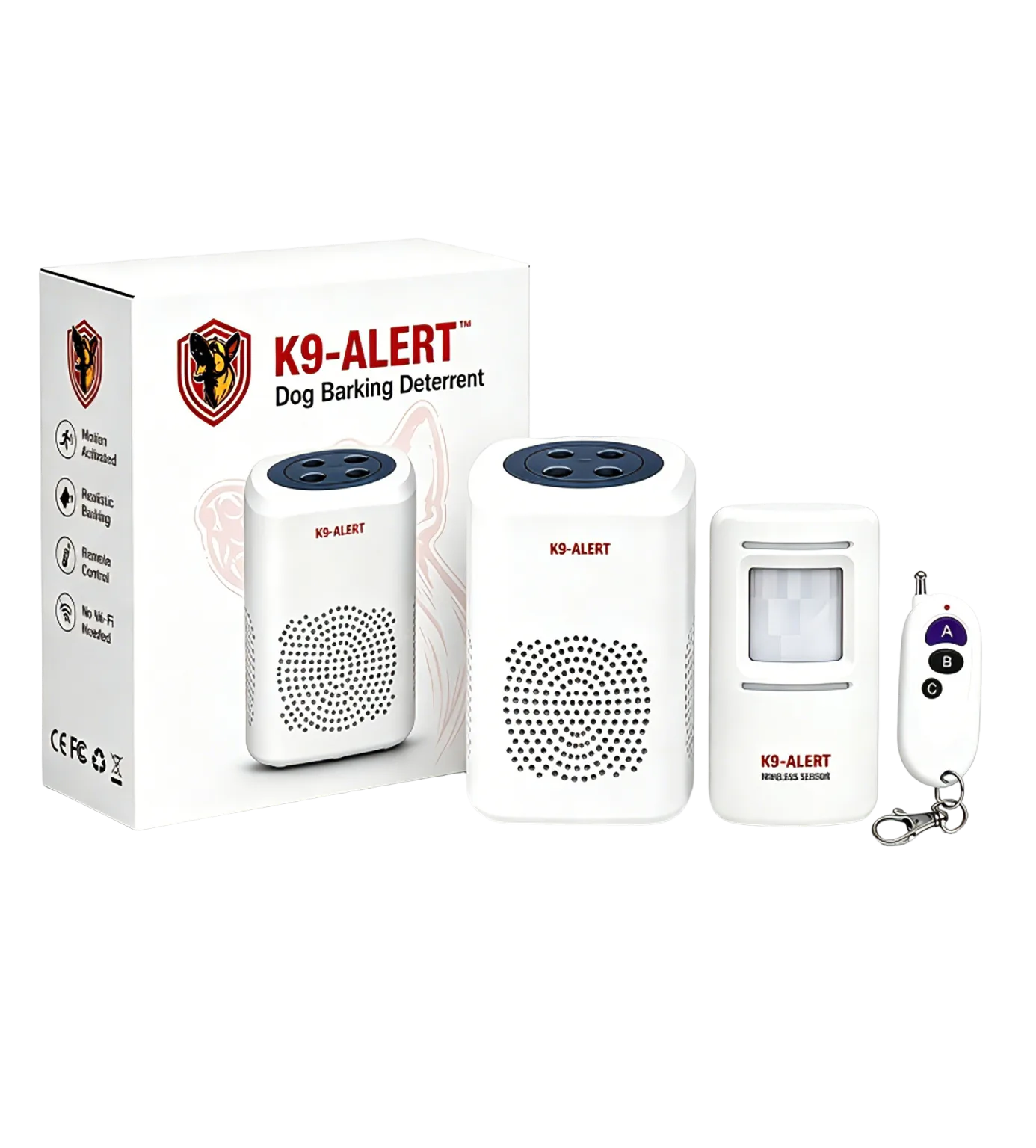
K9-Alert: plug in, position, protect
K9-Alert's wireless sensor sits on any surface — a shelf, ledge, or piece of furniture. The receiver plugs into a power point. No drilling, no stickers on walls, no landlord permission needed. When you move, take it with you.
- No drilling or fixtures: sensor and receiver are completely freestanding.
- No Wi-Fi or app: wireless between sensor and receiver only — no internet connection needed.
- No subscription: one-time purchase, works immediately.
- Takes 5 minutes to set up: out of the box to armed in under five minutes.
3. Window security — without film or drilling
- Window security pins: drill-free track pins that prevent sliding windows and doors being opened more than a few centimetres from outside. Available at hardware stores.
- Window alarm sensor: a small battery-powered contact alarm on the window frame sounds when the window is opened — stick-on, no drilling required, removable.
- Internal visual deterrents: placing a visible item near a window (an alarm box sticker, a "Security system active" label, a shelf with contents suggesting occupancy) lowers the likelihood of a casual approach.
4. Communal area awareness
In an apartment building, the risk is not just your front door. Communal car parks, mailboxes, and basement storage areas are common targets. Additional steps for these shared spaces:
- Always use the intercom or fob entry — do not let people tailgate you through security doors.
- Lock storage cage with a quality padlock (not just the standard latch).
- Never leave packages in the lobby unattended — redirect deliveries to a parcel locker or request a specific delivery time when you're home.
What renters cannot easily do — and the honest alternatives
| Security measure | Renter status | Alternative |
|---|---|---|
| Hardwired alarm system | Requires drilling — landlord permission needed | Wireless battery-powered alarm (K9-Alert) |
| Smart video doorbell (permanent) | Requires drilling or bracket — approval needed | Portable video doorbell (Eufy, Blink) with adhesive mount |
| External CCTV camera (fixed) | Requires strata/landlord approval | Indoor camera visible through window, or doorbell camera |
| Extra deadbolt on door | Requires drilling — landlord approval likely needed | Door security bar (jammer) or portable travel lock |
| Window bars or grilles | Strata and landlord approval required | Window pin locks (track blockers) — no drilling |
Security for ground floor and low-floor apartments
Ground floor and first floor apartments have elevated risk compared to higher floors due to window and balcony access. Additional priorities:
- Balcony sliding door: a track-pin blocker or steel security rod is essential — standard latches on sliding doors are easy to lift off the track from outside.
- Motion alarm pointed at balcony door: position the sensor to cover the balcony entry point directly.
- Night-time window closures: ground-floor windows should be locked at night, not just latched.
Apartment security that moves with you.
K9-Alert is a wireless, battery-powered alarm with no drilling and no installation — perfect for renters. A$99.95 with free AU shipping, 30-day money-back guarantee and 1-year warranty.
Order K9-Alert · $99.95Frequently Asked Questions
Can I install a security alarm in a rental apartment?
Yes — as long as you choose a system that doesn't require permanent fixtures. A wireless, battery-powered alarm like K9-Alert requires no drilling, no adhesive mounting on walls, and no modifications to the property. The sensor sits on a shelf or ledge and the receiver plugs into a standard power point. You can take it with you when you move.
Do I need strata or landlord approval for a security alarm?
For a plug-in, battery-operated alarm with no permanent fixtures, you generally do not need landlord or strata approval in Australia — you are adding a removable appliance, not modifying the property. If you want to install hardwired alarms, monitored systems, or anything that requires drilling into walls or ceilings, you would need written approval from your landlord and potentially strata as well.
What is the most vulnerable entry point in an apartment?
In most Australian apartments the front door is the primary vulnerability — particularly if it only has a spring latch rather than a deadbolt. Ground-floor and low-floor apartments also face risk from balcony or window entry. A motion alarm pointed at the front door or balcony access provides a deterrent at the most likely entry points.
Are apartment buildings safe in Australia?
Apartment buildings vary widely in security quality. High-rise buildings with concierge, key fob access, and internal CCTV are generally well-protected. Mid-rise and low-rise apartment blocks often have shared entry points, car park access, and limited oversight — particularly at night. Individual unit security depends primarily on door lock quality and whether a deterrent (alarm, dog cue) is present.
See the barking dog alarm in action
Product claims are easier to judge when you can hear the device. This short demo shows the K9-Alert barking dog alarm detecting movement and playing realistic barking, so you can assess the sound before deciding where it fits in your home, garage, shed or rental.