
TL;DR: Shed tool theft prevention works best as layers: lock the shed, reduce visibility, record serial numbers, add lighting and use a motion-triggered deterrent before someone reaches the door. K9-Alert fits the deterrent layer because it works without Wi-Fi.
Why sheds are easy to underestimate
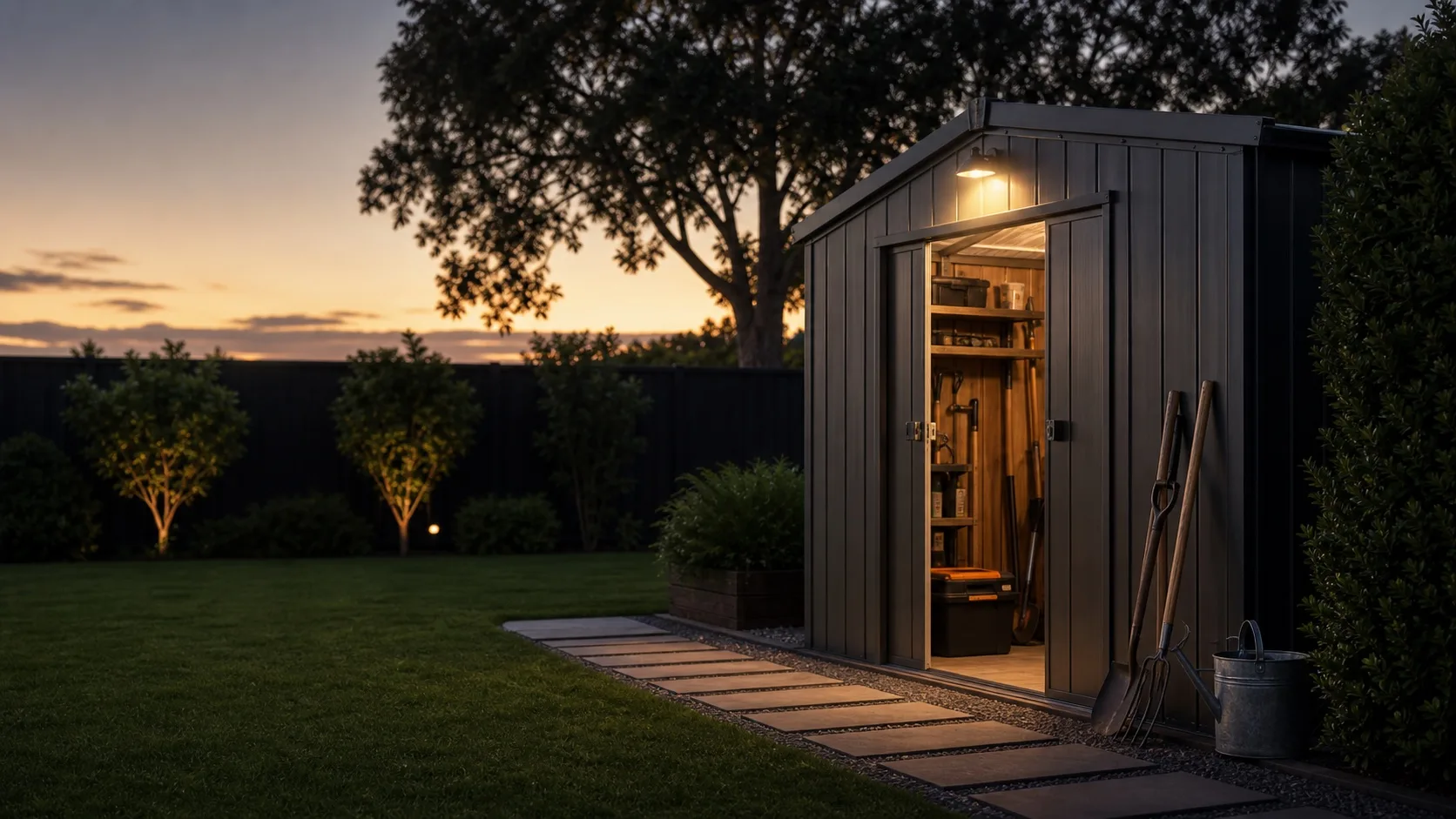
Sheds sit in the gap between home security and vehicle security. They may be close enough to feel private but far enough from bedrooms that noise is missed. Metal walls can weaken Wi-Fi, trees can block sight lines and a side gate can give direct access from the street to tools without anyone touching the house.
ABS Crime Victimisation data for 2024-25 shows Australian households still experienced large numbers of break-ins, attempted break-ins, motor vehicle theft and other theft. The national numbers matter because a shed is often part of the same chain: tools, ladders, bikes, batteries, garage remotes and car accessories can all turn a small backyard entry into a larger loss.
The four-layer shed plan
Good shed security does not rely on one product. It stacks simple layers so each step adds friction.
Lock and reinforce
Use a quality padlock, secure hasp, locked side gate and closed shed door. Keep hinges and screws from being the easiest failure point.
Hide and record
Move high-value tools away from windows, photograph serial numbers and mark property where appropriate.
Light the approach
Use sensor lighting where practical so side paths and gate routes are not comfortable places to linger.
Add an audible deterrent
Trigger sound before the door is opened, not after tools have already been reached.
What police prevention guidance says
Victoria Police tells households to lock sheds and gates, secure valuables, keep tools and ladders locked away and make a property look occupied. Queensland Police similarly advises locking away bikes, lawn mowers, ladders and garden implements, and keeping garage or shed doors closed and locked with a key.
The common theme is simple: a shed should not look like an unattended toolbox. Reduce the invitation, then add a cue that makes the approach feel noticed. Moved padlocks, fresh scratches or a gate left ajar can be early warnings, and the signs a garage is being targeted apply to sheds too.
Where K9-Alert fits in shed security
K9-Alert is useful when the shed is too far for reliable Wi-Fi or when you do not want another app-managed camera. The wireless motion sensor can watch the path to the shed door, side gate or covered approach. The receiver can stay protected while the bark projects toward the movement.
That sound layer is not a replacement for a lock. It is a before-entry deterrent. A person who expected a quiet backyard suddenly hears barking and has to decide whether someone is home, whether neighbours can hear and whether the shed is worth the risk. That hesitation is the point.
Common shed security mistakes
The first mistake is protecting the house well and leaving the shed as an afterthought. The second is storing chargers, batteries and tool cases in plain view through a window. The third is letting ladders, bolt cutters or garden tools sit outside where they can be used against the property. These are small habits, but they change how easy the shed looks from the outside.
Another mistake is relying on a phone notification as the only response. If the shed is being tested at night, the useful cue is the one that happens immediately at the shed. A local sound deterrent does not wait for you to notice an alert; it changes the scene while the person is still deciding whether to continue.
Practical placement
- Watch the approach path. Aim the sensor across the route to the shed, not at the back wall after entry.
- Protect the device. Keep the receiver and sensor out of unsuitable exposure and follow the product instructions.
- Pair with lighting. A bark cue plus sensor lighting is stronger than either cue alone.
- Review after storage changes. Move the sensor when tools, bikes or battery chargers move to a different part of the shed.
Protect the shed before tools are reached.
K9-Alert adds a wireless barking deterrent layer for sheds, garages and side paths without Wi-Fi or monthly fees.
Read next
For a shed-specific product page, read the wireless shed alarm guide. If the shed connects to a garage or vehicle area, see garage security alarm without Wi-Fi. If the first weak point is the wider yard, use the backyard security guide.
Frequently asked questions
How do I stop tools being stolen from my shed?
Stack four layers: a quality lock on a reinforced door, reduced visibility of what is inside, recorded serial numbers for police and insurance, and lighting plus a motion-triggered deterrent that reacts before someone reaches the door.
Does a shed alarm need Wi-Fi?
No — and in practice it should not depend on it. Metal shed walls weaken Wi-Fi signals, which is why an offline motion-triggered barking alarm suits detached sheds.
Why record tool serial numbers?
Recorded serial numbers give police something to match recovered property against and make insurance claims faster. It is the cheapest layer in the plan.
How common is shed and tool theft in Australia?
ABS Crime Victimisation 2024-25 estimates 196,600 household break-ins, 217,500 attempted break-ins, 64,400 motor vehicle thefts and 183,100 other-theft incidents — detached storage is often the easy target in that chain.
See the barking dog alarm in action
Product claims are easier to judge when you can hear the device. This short demo shows the K9-Alert barking dog alarm detecting movement and playing realistic barking, so you can assess the sound before deciding where it fits in your home, garage, shed or rental.